
Basement areas and narrow side returns are the most difficult growing conditions in a domestic garden: deep shade, dry soil, poor air movement and often no direct sun at all.
Establish what you have
Watch for a few weeks and note whether any direct sun reaches the space, and for how long.
A basement that gets an hour of sun in midsummer is a different proposition from one that never does.
Distinguish dry shade from moist shade, since it changes the plant list entirely. Most basement areas are dry, being sheltered from rain by the building above.
Note whether the space is damp and stagnant, which some are, or dry and airless.
Improving the light
Small changes make a disproportionate difference.
Paint the walls white or a very pale colour. Reflected light is the cheapest improvement available and it transforms a dark area.
Keep glass clean, including any grating or light well.
Cut back overhanging growth from above, and thin any tree canopy that can be reached.
Use pale paving rather than dark, which reflects light upwards.
A mirror, angled and partly hidden by planting, adds light and apparent depth. Position it so birds will not fly into it.
Consider lighting for the evening, since a basement is dark by mid-afternoon for much of the year.
Dealing with the ground
Basement soil is frequently builders' rubble, mortar and subsoil, and the mortar raises the pH locally.
Dig a hole and look before planting anything. Remove rubble, replace with topsoil and improve generously with compost.
Rain rarely reaches the base of the walls, so water thoroughly for the first two seasons and mulch every spring.
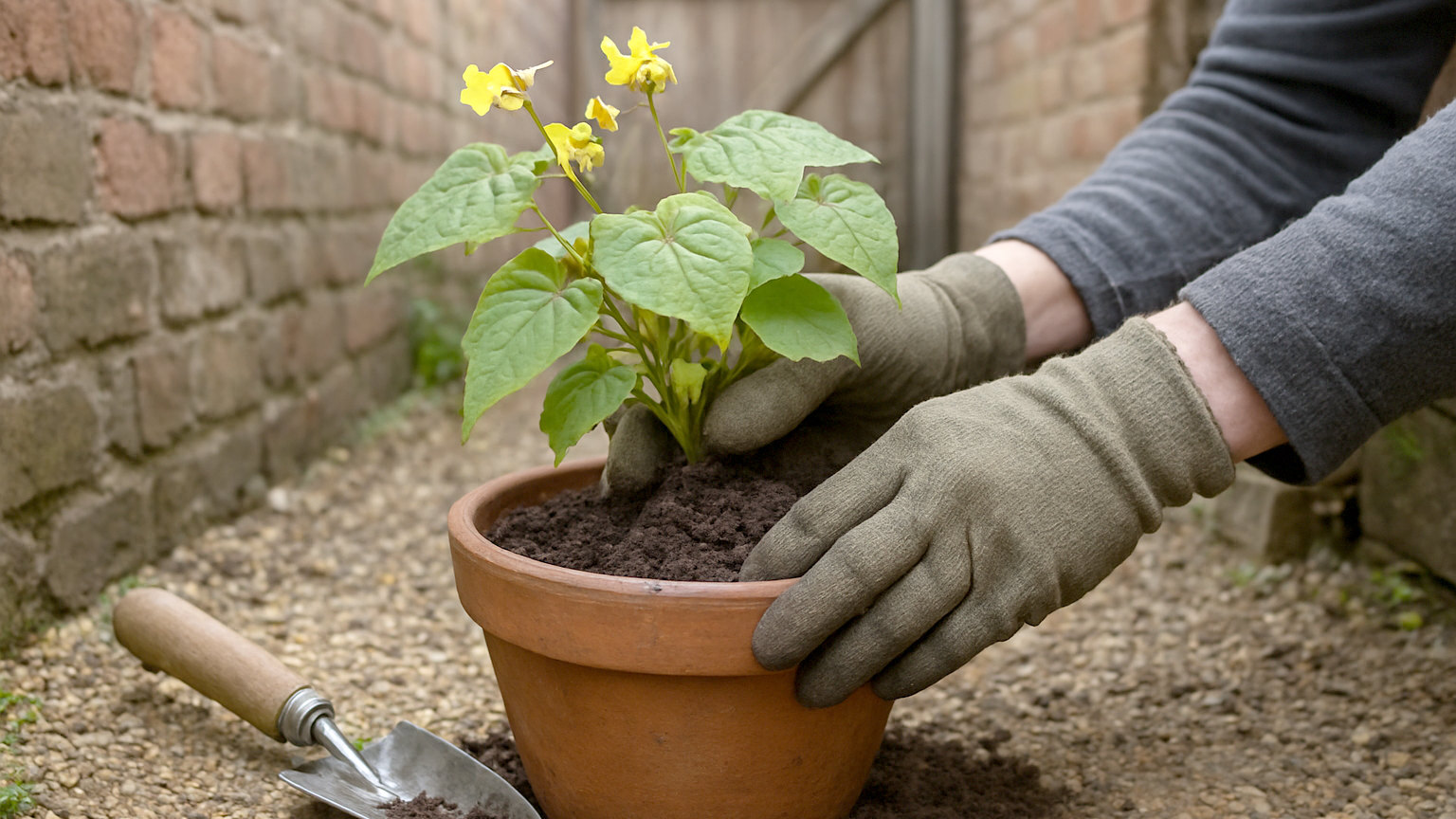
Many basement gardens are better planted entirely in containers, which allows the compost, drainage and position to be controlled.
Plants that genuinely cope
Ferns are the mainstay. Dryopteris, polystichum, asplenium and polypodium all tolerate dry shade, and matteuccia and osmunda want moisture.
Foliage perennials: epimedium, Geranium macrorrhizum, bergenia, lamium, brunnera, tiarella, tellima, pulmonaria, hosta where slugs allow.
Euphorbia amygdaloides var. robbiae, which is among the most reliable plants for genuinely dry shade.
Shrubs: fatsia, aucuba, sarcococca for winter scent, skimmia, mahonia, Portuguese laurel, ivy on the walls.
Bulbs: snowdrops, cyclamen hederifolium and coum, which flower before and after everything else.
Choose pale and variegated foliage and white flowers, which read in low light where dark colours vanish.
What will not work
Lavender, most roses, Mediterranean planting, most vegetables and anything needing sun will become drawn and leggy and eventually rot.
Feeding harder does not compensate for lack of light.
Lawn will not establish in deep shade and is best replaced with paving, gravel or shade-tolerant planting.
Attempting to keep grass going in a basement area is a permanent losing battle.
Drainage
Sunken areas collect water, and a blocked gully floods a basement.
Keep drains and gullies clear of leaves, check them regularly, and make sure any grating can be lifted.
Do not raise ground levels against the building, and keep everything clear of the damp-proof course.
Side returns
Narrow, shaded and usually a route rather than a destination.
Treat them as a corridor: a firm clear path, planting on the walls rather than the floor, and storage where it does not obstruct.
Wall-mounted containers, shelves of pots, ferns and ivy all suit, and a single well-lit focal point at the far end draws the eye through.
Making it worthwhile
A basement or side return will not become a sunny garden, and treated as a green shaded room it can be genuinely good.
Ferns, evergreen structure, pale walls and a few large containers produce something restful that looks well from the window all year round.
Containers rather than beds
Where the ground is rubble and permanently dry, containers are frequently the better answer.
They allow the compost and drainage to be controlled, can be moved to the least dark corner, and can be swapped out when something fails.
Use large containers with loam-based compost, group them, and fit a drip line on a timer if there are more than a few.
Air movement
Still, damp and airless conditions encourage mildew and moss. Avoid packing planting tightly against the walls, and thin congested growth to let air through it.


