
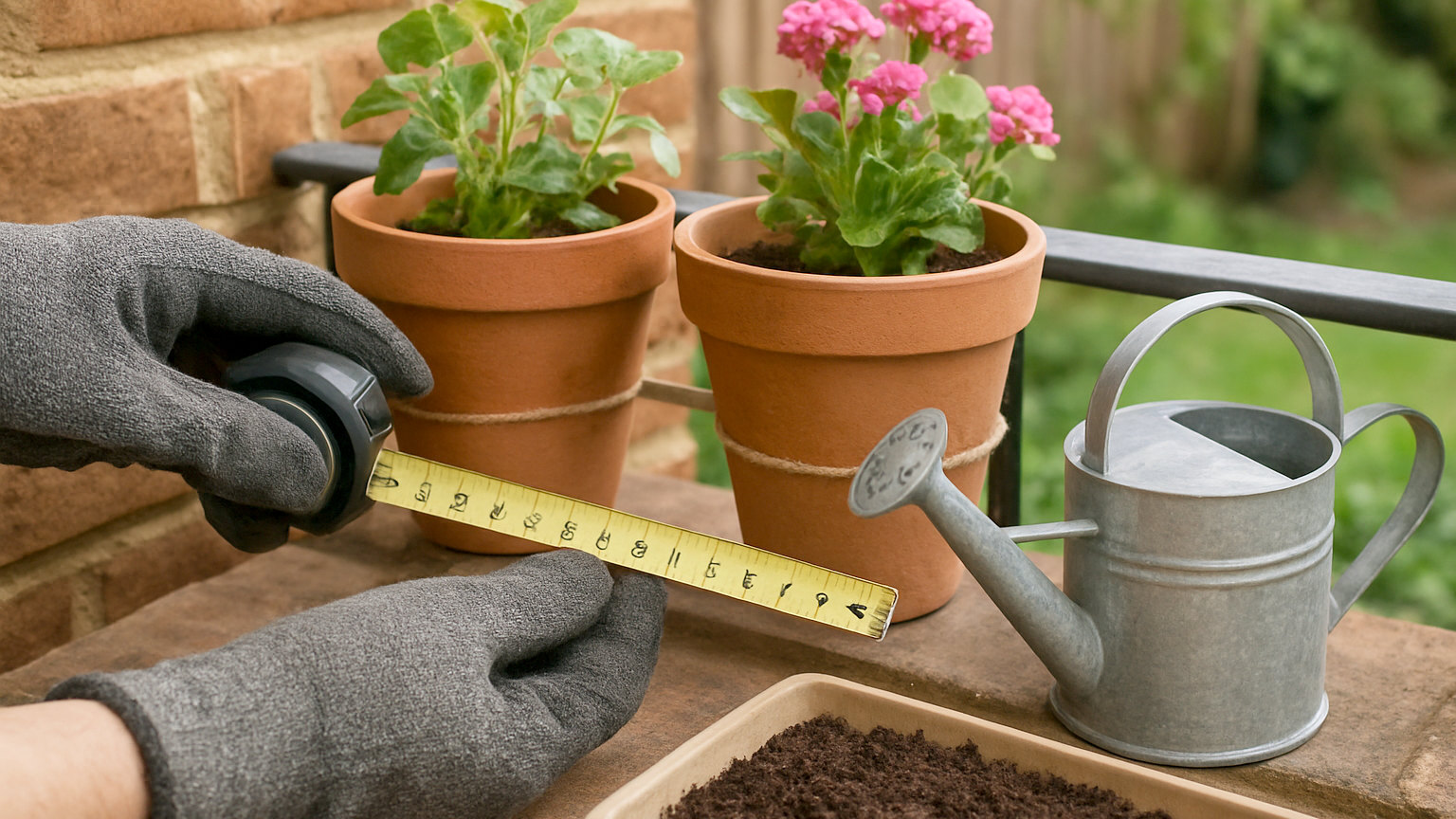
A balcony is a structure with a design loading, and containers of wet compost are among the heaviest things people put on one. This is worth establishing before buying pots rather than afterwards.
How heavy it actually is
Water weighs a kilogram per litre. Saturated compost weighs a good deal more than dry compost, and a loam-based mix is substantially heavier than a peat-free multipurpose.
A large container of wet loam-based compost, with a mature plant in it, can weigh well over a hundred kilograms.
Several of those, plus furniture, plus people, adds up quickly.
Check the limit
Find out the design loading before loading the balcony.
For a flat, ask the freeholder, the managing agent or the building manager. For a house, the original drawings or a structural engineer.
Older balconies, and those with corroding steel reinforcement or timber structure, may be considerably weaker than they appear. Balcony failures have caused serious injuries.
If in any doubt, get a structural engineer to look at it. This is not a case for optimism.
Distributing the load
Keep heavy items close to the building wall and over the structural edges rather than in the middle of the span, where the deflection is greatest.
Spread the load rather than concentrating it: several smaller containers distributed are safer than one very heavy one in the centre.
Use lightweight alternatives. Fibreglass, composite and plastic containers weigh a fraction of stone or terracotta.
Use a lighter growing medium, with perlite or a specific lightweight mix, rather than loam-based compost.
Avoid large water features entirely, since the water alone is prohibitive.
Wind
Balconies, particularly at height, are far windier than ground level, and wind both dries plants out rapidly and blows things off.
Anything that could fall must be secured. A pot falling several storeys is potentially fatal.
Do not place containers on the railing or the parapet, however secure they look.
Secure window boxes and rail planters with proper brackets rated for the load, fixed to sound structure and checked regularly.
Weight down or secure furniture, parasols and anything lightweight.
Choose tough plants: grasses, sedums, lavender, rosemary, hebes and dwarf pines cope. Large-leaved plants are shredded.
A permeable screen filters wind and gives shelter, and it also catches wind itself, so it must be fixed securely.
Drainage and neighbours
Water running off a balcony onto the one below, or onto a street, causes justified complaints.
Use trays and saucers while watering, and water carefully rather than flooding pots.
Check where the balcony drains and keep the outlet clear.
Avoid anything that stains: compost, feed and leaf litter all mark the surfaces below.
Sweep up dropped leaves and compost regularly.
Leases and permissions
Many leases restrict what can be placed on a balcony, and some prohibit planters, trellis, screening or fixings to the structure entirely.
Fixing anything to the building fabric usually needs the freeholder's consent.
Balconies are frequently designated escape routes and must be kept clear. Check the fire strategy for the building, and never obstruct a route or a break-through panel.
Barbecues and fire pits are prohibited on many balconies, and gas cylinders are frequently banned outright.
Never use fuel-burning appliances
A balcony with any degree of enclosure is not open air. Never use a barbecue, fire pit or fuel-burning heater in an enclosed or partly enclosed balcony because of carbon monoxide, which is colourless, odourless and can be fatal.
Practical points
Check the waterproof membrane and drainage before covering a balcony with decking tiles or gravel, since anything laid over it makes inspection difficult.
Leave access to the structure for inspection and maintenance.
Group containers so watering is quick, and fit a small drip system on a timer if you can.
Making it work
Within those constraints a balcony can be genuinely productive and pleasant.
Use lightweight containers grouped near the wall, tough wind-tolerant planting, vertical growing on any available surface, and folding furniture that can be moved.
Herbs, salads, tomatoes and strawberries all crop well in the sun and wind of a typical balcony, provided the watering is kept up.
Scented plants earn their place particularly, since a balcony is a small enclosed space where scent carries and is noticed every time you step outside.


