
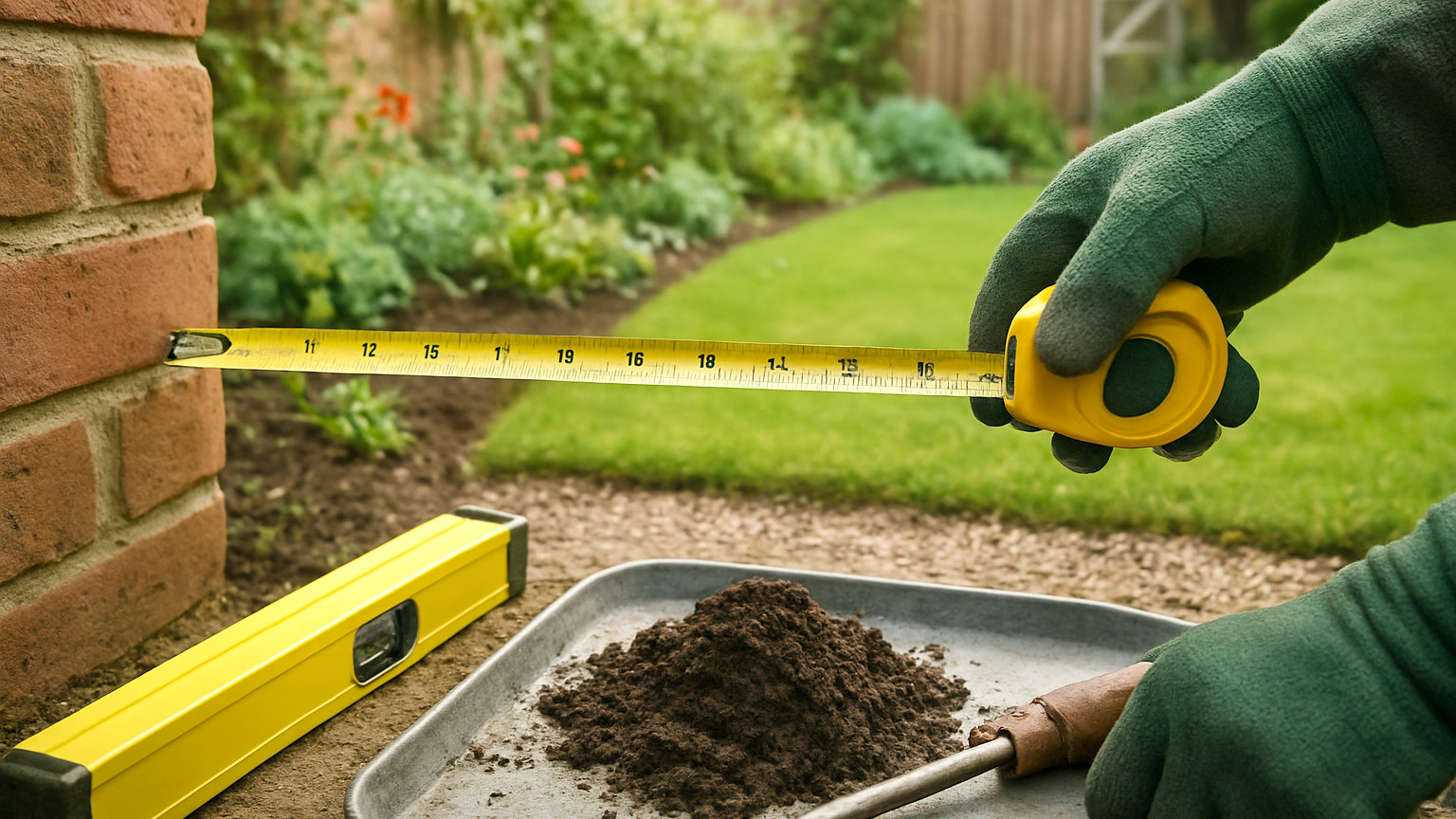
The temptation with a new garden is to start immediately. A season spent observing produces a far better result, and several of the checks below cannot sensibly be done after the work has started.
Sun and shade through the year
The single most useful thing to record, and it changes dramatically between seasons.
A border in full sun in June may be in shade from October to March, when the sun is low and buildings and evergreens cast long shadows.
Note where the sun falls at morning, midday and evening, and repeat in each season. Photographs with the time noted are the easiest record.
Identify where you would want to sit at different times of day, since a terrace that catches the evening sun is worth more than one that does not.
Soil
Dig several holes in different parts of the garden, since soil varies within a plot, particularly near buildings where builders' rubble is common.
Note the texture. Roll a moist handful: clay forms a smooth ball and holds a shine when rubbed; sand feels gritty and falls apart; loam is somewhere between.
Note the depth of topsoil before you reach subsoil, and anything buried.
Test the pH with a cheap kit in several places, since it determines what will grow without a fight.
Drainage
Dig a hole about thirty centimetres deep, fill it with water, and see how long it takes to drain.
Still standing after a few hours means drainage is poor and the planting or the levels need to account for it.
Note where water collects after heavy rain, and where the ground stays wet longest in winter.
Wind and shelter
Note the prevailing wind direction and any point where wind funnels between buildings, which is often worse than open exposure.
Identify frost pockets, where cold air collects at the bottom of a slope or behind a solid barrier.
Services and structures
Locate everything buried before any digging. Electricity, gas, water, drainage, and any cable to a shed or a light.
Look for inspection covers, meter positions and where pipes enter the house, and check any deeds or plans you have.
A cable detector is worth hiring for a substantial project. Contact the utility companies for plans where you are excavating anything significant.
Note drain runs, soakaways, septic tanks and the position of any manhole that must remain accessible.
Check the damp-proof course on the house, since ground levels must stay at least a hundred and fifty millimetres below it.
What is already there
Do not remove anything in the first year unless it is dangerous or clearly dead.
Bulbs, perennials and shrubs appear at different times, and a bed that looks empty in January may be full in April.
Check whether any tree is covered by a Tree Preservation Order or sits within a conservation area, since both require consent before work and unauthorised removal carries substantial penalties.
Identify what is growing well, which tells you more about the conditions than any test.
Note perennial weeds, which must be cleared before planting rather than after.
Views, in and out
Note what you see from the windows you use most, particularly the kitchen sink and wherever you sit.
Note anything you want to hide and anything worth framing, including views beyond the boundary that can be borrowed.
Note where you are overlooked, and from which windows.
Access and practicalities
How materials will get in, and whether a barrow can reach the far end.
Where bins, bikes, compost and washing will go, which is easily forgotten and hard to add later.
Where the outside tap and any power supply are.
How you will use it
Write down what the garden has to do: seating, eating, children, growing food, drying washing, storage, parking.
Be honest about how much time you will spend maintaining it, since that governs the design more than anything else.
Neighbours and boundaries
Establish which boundaries are yours before altering anything. The deeds may show it; the convention that the posts face your side is a guide rather than a rule.
Note overhanging branches and roots crossing the boundary, and talk to the neighbour before doing anything about them.
Recording it
Photograph everything from fixed points in each season, and keep the notes together. Six months later you will not remember where the shade fell in February.


