
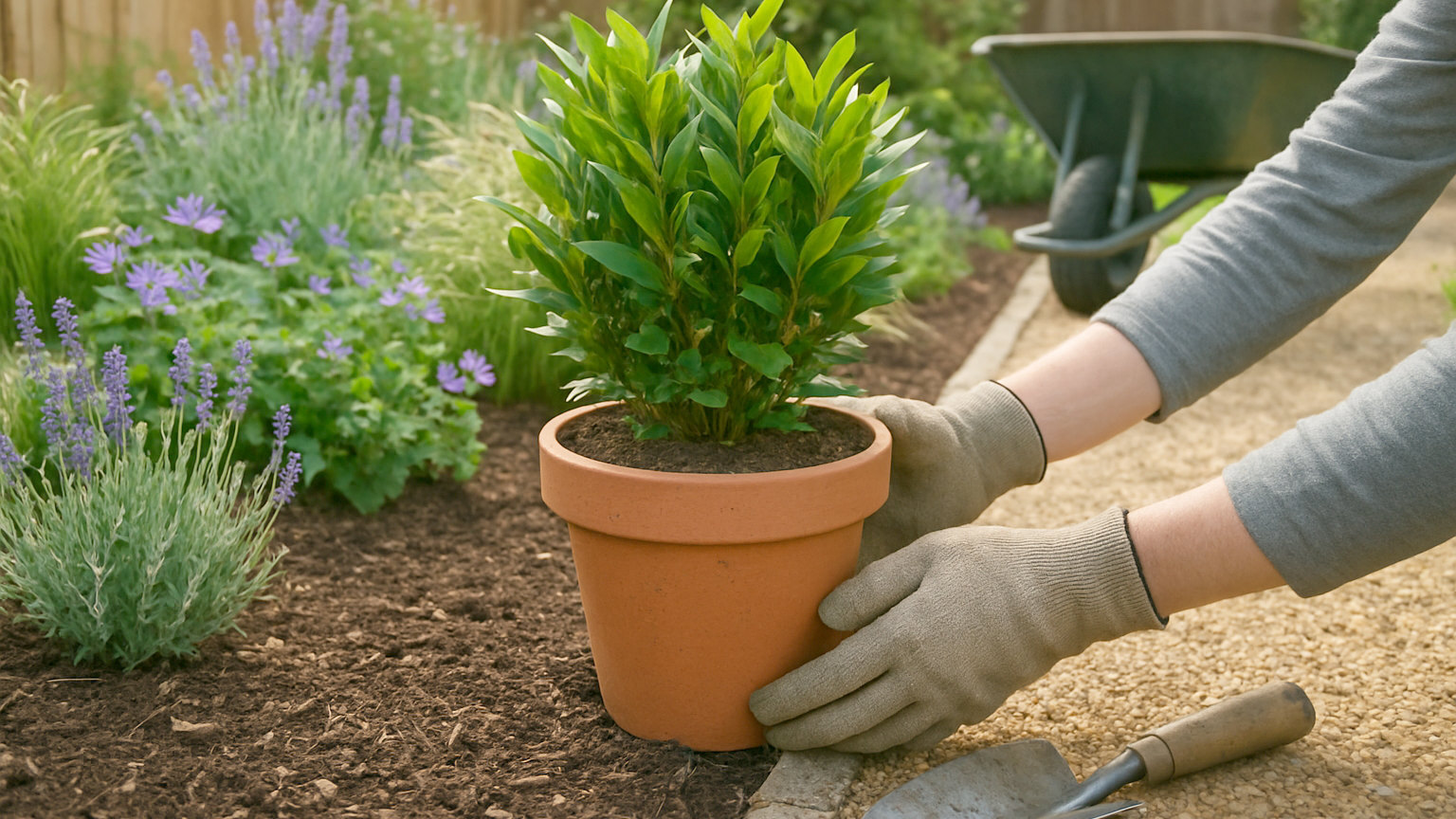
Low maintenance is a design decision made at the outset, not something achieved afterwards by working harder. Most of what reduces work costs nothing extra and is invisible in the finished garden.
Right plant, right place
The single biggest factor. A plant suited to its position needs almost nothing. One fighting its conditions needs help forever.
Match plants to the soil, the aspect, the drainage and the exposure you actually have rather than the ones you would prefer.
Check eventual height and spread and plant at that spacing. A shrub needing cutting back three times a year to fit its position is the wrong plant for that position.
Choose disease-resistant varieties, particularly for roses and fruit.
Plant densely
Bare soil grows weeds. A border where plants have knitted together leaves nowhere for a seedling to germinate.
Ground cover, generous groups of perennials and shrubs that meet within a few years all reduce weeding to almost nothing.
Mulch annually until they do, which suppresses weeds meanwhile and improves the soil.
Reduce the number of different things
Twenty species each needing different treatment at different times is far more work than five repeated.
Repetition also looks better, so this is a rare case where the easier option is the more attractive one.
What is actually high maintenance
Bedding, replaced twice a year and watered daily.
Containers, which need daily watering and regular feeding.
Hedges needing three cuts a year, such as privet and Leyland cypress.
Fine lawns, which want weekly mowing, feeding, scarifying and edging.
Anything trained: espaliers, topiary, wall shrubs.
Plants in the wrong position, anywhere in the garden.
What is genuinely low maintenance
Established trees and shrubs, which need an annual look and little else.
Perennials that do not need staking or dividing often: hardy geraniums, epimedium, hellebores, brunnera, grasses.
Ground cover under shrubs.
Hedges cut once a year: yew, beech, hornbeam, native mixes.
Bulbs naturalised in grass, needing only a delayed first cut.
Gravel gardens with drought-tolerant planting, which need no watering, feeding or mowing.
Paving is not the answer
Hard surfaces still need maintenance: weeds in joints, moss, algae, cleaning and eventual repair.
They also create drainage problems, get hot in summer, support no wildlife, and rarely look good.
Extensive impermeable paving in a front garden may need planning permission, and it contributes to surface water flooding.
A well-planted low-maintenance garden is less work than a large paved area, and considerably more pleasant.
Design decisions that help
Simplify the lawn shape so it can be mown without repeated reversing, and remove narrow strips and tight corners.
Fit a mowing strip of bricks or paving flush along border edges, which removes the edging job permanently.
Keep a mulched circle around trees, which removes strimming near the trunk.
Install irrigation for containers if you have them, on a timer.
Site anything needing attention close to the house, and low-maintenance planting furthest away.
Choose materials that weather well rather than ones needing annual treatment. Timber decking, painted fences and gravel paths all need ongoing work.
Be realistic
No garden is no maintenance. Every garden needs an annual mulch, a look at the shrubs, and clearing up in autumn.
Aim for a few hours a month rather than none at all, and design so that the hours go where you enjoy spending them.
Reducing work in an existing garden
Replace bedding with perennials. Reduce the number of containers or fit irrigation. Simplify the lawn shape. Mulch every border annually. Remove any plant you fight with each year and replace it with something suited to the position.
Each of those is a single job that removes a recurring one.
Wildlife benefits
Low maintenance and wildlife-friendly point in the same direction: less tidying, seedheads left standing, dense planting, an unmown area and a mulched surface all reduce work and support far more.
Cutting perennials back in February rather than autumn is less work and better for insects overwintering in hollow stems.
Leaving fallen leaves in borders saves clearing them and feeds the soil as they rot down.
The initial investment
A low-maintenance garden usually costs more to establish, since it means buying more plants to fill space densely and preparing the ground properly.
Clearing perennial weeds thoroughly before planting is the clearest example: a season's delay at the start saves years of work afterwards.


