
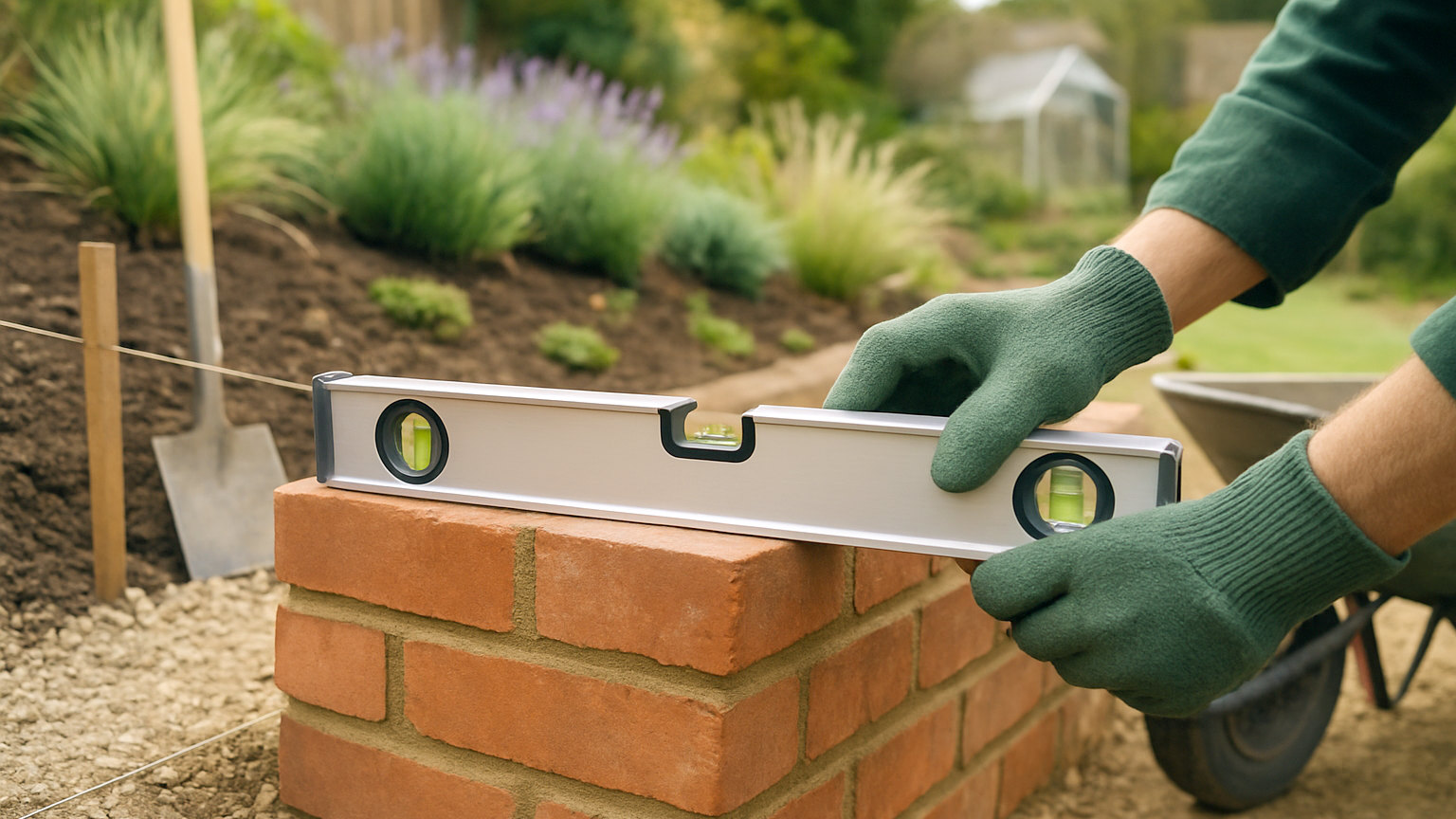
A sloping garden offers views, drama and natural drainage that a flat plot does not. It also costs considerably more to develop, and the structural elements are the part where mistakes are expensive and occasionally dangerous.
Working with the slope
The cheapest approach is to leave the levels alone and design around them.
A gently sloping lawn is perfectly usable. Planting on a bank suits Mediterranean species, prostrate shrubs and ground cover, and holds the soil far better than grass.
A path that runs across the slope rather than straight up it is easier to walk and cheaper to build than steps.
Ground cover on a steep bank removes the need to mow, which is the strongest argument for planting rather than grassing a slope.
Terracing
Cutting a slope into level platforms is the traditional solution and gives usable flat space.
The usual method is cut and fill: soil is excavated from the higher part and used to build up the lower, which balances the volumes and minimises material moved.
Fewer, larger terraces read better than many narrow ones, which produce a stepped effect like a staircase.
Keep the terrace nearest the house level with the house and generous enough to be useful.
Filled ground settles. Compact it in layers as you build up, and allow time before laying paving on made-up ground, or expect it to sink.
Retaining walls
This is where the engineering matters.
A retaining wall holds back a great deal of weight, and saturated soil is heavier still. Walls fail by leaning, cracking or being pushed over, and the causes are nearly always inadequate foundations or trapped water.
Any retaining wall over about a metre, or anything retaining ground near a building or a boundary, needs professional design.
Building regulations and structural calculations apply to substantial retaining structures, and a failure can damage property and injure people.
Drainage behind a wall
The commonest cause of failure, and the part most often omitted.
Water building up behind a wall exerts enormous pressure. The remedy is drainage.
Backfill immediately behind the wall with free-draining material such as clean gravel, separated from the soil with a geotextile membrane.
Fit weep holes through the wall at intervals near the base, or a perforated land drain behind it leading to a suitable outlet.
A wall built solidly against wet clay with no drainage will eventually move.
Materials
Brick and stone look best and need proper foundations and skilled construction.
Concrete blocks, rendered or faced, are cheaper and structurally straightforward.
Timber sleepers are popular and effective for low retaining, and need to be properly fixed and anchored back into the bank rather than simply stacked. Use timber suitable for ground contact, and note that reclaimed railway sleepers may be treated with creosote, which is restricted and unsuitable near people and food crops.
Gabions filled with stone drain freely and suit an informal setting.
Steps
Garden steps should be shallower than indoor ones: risers of about a hundred and fifty millimetres and treads of at least three hundred and fifty.
All risers in a flight must be equal, since an odd one causes trips.
Wide steps look far better than narrow ones and can double as seating.
Fit handrails on anything steep or used by older people, and light the treads.
Use a non-slip surface, since garden steps get algae and are used in wet weather.
Ground levels near the house
Ground must stay at least a hundred and fifty millimetres below the damp-proof course. Raising levels against a wall causes damp inside and is a common and expensive error.
Where a terrace must sit high, use a drainage channel and a gap rather than butting the surface against the wall.
Access during work
Consider how machinery and materials will reach a sloping site, since access frequently determines the cost more than the design does.
A garden reached only through the house means everything is barrowed by hand, which changes the economics of any substantial project.
Planting a slope
Plant into individual pockets with a small terrace scraped behind each plant to hold water, since rain runs straight off a bank.
Mulch generously and consider a temporary erosion mat on a steep bank until the planting knits together.


