
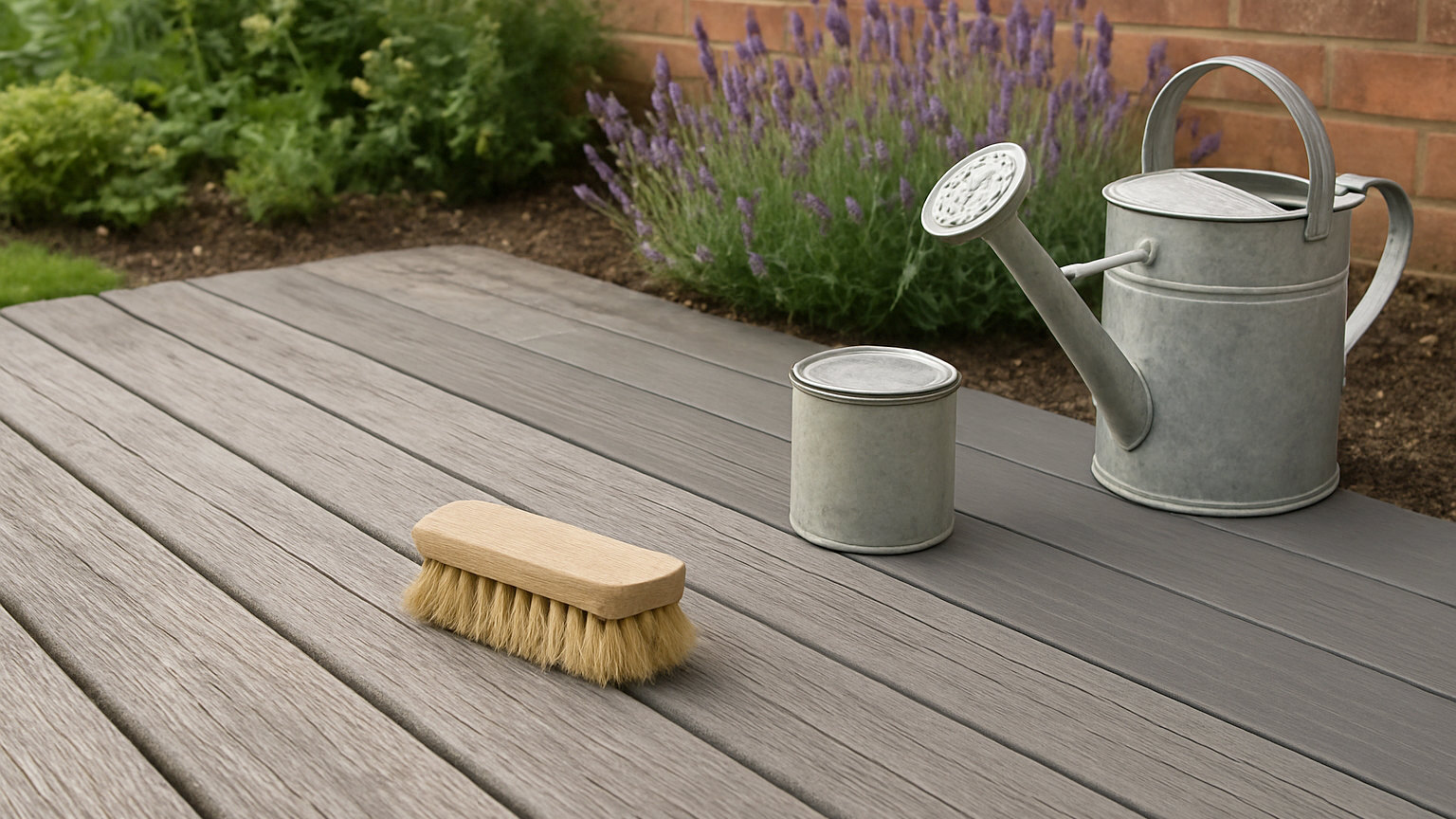
The choice is essentially between a lower initial cost with ongoing maintenance, and a higher initial cost with almost none. Both are legitimate, and the deciding factor is usually whether you will actually do the maintenance.
Softwood timber
Pressure-treated pine or spruce, the cheapest option and the most widely used.
It looks best in the first couple of years and then weathers to grey unless treated.
Expect to clean it annually and to apply a decking oil or stain every one to two years to keep the colour and resist water ingress.
It splinters and cracks with age, particularly if it dries out, and boards can cup and twist.
With good treatment and good detailing it lasts fifteen to twenty years or more; neglected, considerably less.
Hardwood timber
Dense tropical hardwoods such as balau and ipe, and European oak.
Far more durable and much more expensive, with a longer life and better resistance to rot and insects.
It still weathers to silver-grey unless oiled, which most people accept and some prefer.
It is difficult to work: pre-drilling is essential, and it blunts tools quickly.
Check the source. Look for FSC or equivalent certification, since illegal and unsustainable logging remains a genuine problem with tropical hardwoods.
Composite
A mixture of wood fibre and plastic, frequently using recycled content, either uncapped or capped with a protective polymer shell.
Capped composite is the version worth buying. The shell resists staining, fading and mould in a way uncapped composite does not.
The advantages are real: no oiling or staining, no splinters, no rot, consistent colour, and a life often quoted at twenty-five years or more with a manufacturer's warranty.
It still needs washing to remove dirt and algae, so it is low maintenance rather than no maintenance.
The composite drawbacks
It gets hot. Dark composite in direct sun becomes uncomfortable underfoot, noticeably more so than timber. Lighter colours are cooler.
It expands and contracts more than timber with temperature, so the manufacturer's expansion gaps must be followed exactly.
It usually requires closer joist spacing than timber, sometimes three hundred millimetres or less, and sags if laid on standard four hundred centres.
It cannot be sanded back or refinished. Scratches and damage are permanent.
Cheap composite can look artificial, and early uncapped products acquired a poor reputation for mould and fading that better modern boards have largely addressed.
The initial cost is typically two to three times that of softwood.
Cost over time
Softwood is cheapest to install and costs money and a weekend every year or two thereafter.
Composite costs considerably more at the outset and very little afterwards.
Over twenty years the totals are not far apart. The real difference is whether the maintenance actually gets done, and on a great many timber decks it does not.
Slip resistance
Both become slippery with algae, which is the main safety issue with any deck in Britain.
Grooved or ribbed timber boards are widely sold as anti-slip and the grooves collect dirt and water, which arguably makes matters worse. Many decking specialists now recommend laying grooved boards smooth side up.
Composite is available with textured and embossed surfaces, and some products carry slip ratings worth checking.
Whatever the material, regular cleaning is what keeps a deck safe.
Appearance
Timber looks and feels like timber, weathers with character and can be refinished.
Composite looks uniform, stays looking new, and to some eyes never quite convinces.
This is a matter of taste and it is worth seeing samples outdoors rather than in a showroom.
Which to choose
Timber where budget matters, where you will do the maintenance, or where the appearance of real wood is the point.
Capped composite where you will not, or where a deck in a shaded damp position would otherwise be a constant battle.
Buying
See samples outdoors and wet rather than in a showroom, since both materials look quite different in daylight and rain.
Check the warranty terms on composite, including what it actually covers and for how long, and check the fixing and joist spacing requirements before ordering the frame timber.
Order about ten per cent extra for cuts and future repairs, and keep the surplus somewhere dry and flat.
Colours vary between production batches with both materials, so ordering everything at once matters.


