
Most terraces are built immediately outside the back door because that is where the ground is flat and the access is easy. It is frequently the wrong place, and the mistake is expensive to correct.
When will you actually use it
Start with the honest answer to this rather than with the layout.
Most people use a terrace on summer evenings and at weekends. A few use one for breakfast. The times you will genuinely sit outside determine where the sun needs to be.
A terrace that catches the morning sun and is in shade by four o'clock is of little use to anyone who works during the day.
Track the sun before deciding
Spend a few days noting where the sun falls at different hours, and repeat at different times of year.
The sun is low in spring and autumn, when shadows from buildings, fences and evergreens are far longer than in midsummer.
A south or west-facing position catches the afternoon and evening sun, which is what most people want.
An east-facing position gets morning sun and is in shade by early afternoon.
A north-facing area outside the house may never receive direct sun at all, and no amount of good paving will change that.
It need not be by the house
A terrace can go anywhere in the garden, and putting a seating area where the sun actually is usually produces a far better result than paving the space by the door.
Consider a second smaller area at the sunny end of the garden, with a simple path to it.
Many gardens work well with a small paved area by the door for practical use, and the main sitting area sited where the evening sun reaches.
Shelter matters as much as sun
Wind is what stops people using a terrace more often than temperature.
Note where wind funnels between buildings, along a boundary, or down a slope. These are frequently worse than open exposure.
Filter wind rather than blocking it. A solid fence or wall creates turbulence on the sheltered side that can be worse than the open wind, while a hedge or a slatted screen slows air passing through it and gives real shelter for several times its height.
Shelter on the windward side of a seating area transforms how usable it is.
Privacy
Note which windows overlook the spot, and from what angle.
Screening close to where you sit blocks a far wider angle than a taller boundary further away, and needs much less height.
Where the overlooking comes from above, only overhead structure helps: a pergola, a parasol or a tree canopy.
Practical considerations
Distance from the kitchen matters if you eat outside. Carrying food and plates fifty metres is done once and then not again.
Level access from the house is worth a great deal, particularly with a tray, a pushchair or limited mobility.
Consider where the sun sets and what you will be looking at. A terrace facing a fence is less pleasant than one facing the garden, even if the sun is right.
Note existing trees. Shade in high summer is welcome; a tree directly overhead drops sap, debris and bird droppings onto furniture.
Ground and drainage
Avoid a hollow where cold air and water collect, and check where surface water runs after heavy rain.
A terrace at the bottom of a slope collects everything above it unless the drainage is dealt with.
Test it before building
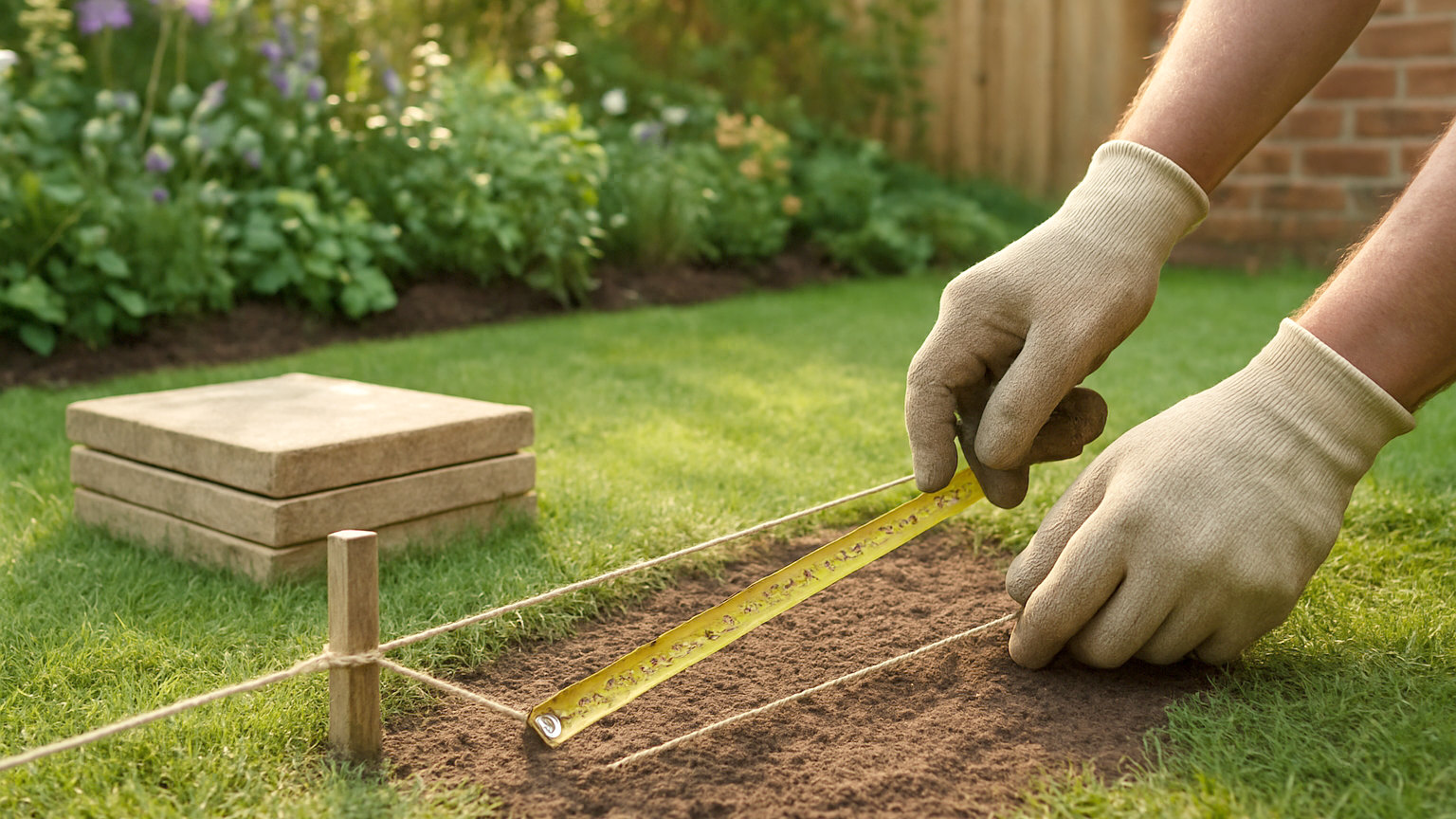
Mark the area out with canes, string or a hosepipe and put the actual furniture on it.
Sit there at different times of day and in different weather for a week or two.
This costs nothing and it is the only reliable way to know whether the position is right. Almost everyone who does it moves the proposed location at least slightly.
More than one seating area
Gardens are often better with two: a practical paved area by the door for putting things down and getting in and out, and a proper sitting area sited where the sun and shelter are.
The second need not be large or expensive. A circle of paving big enough for two chairs, reached by a simple path, is frequently the most used part of a garden.


