
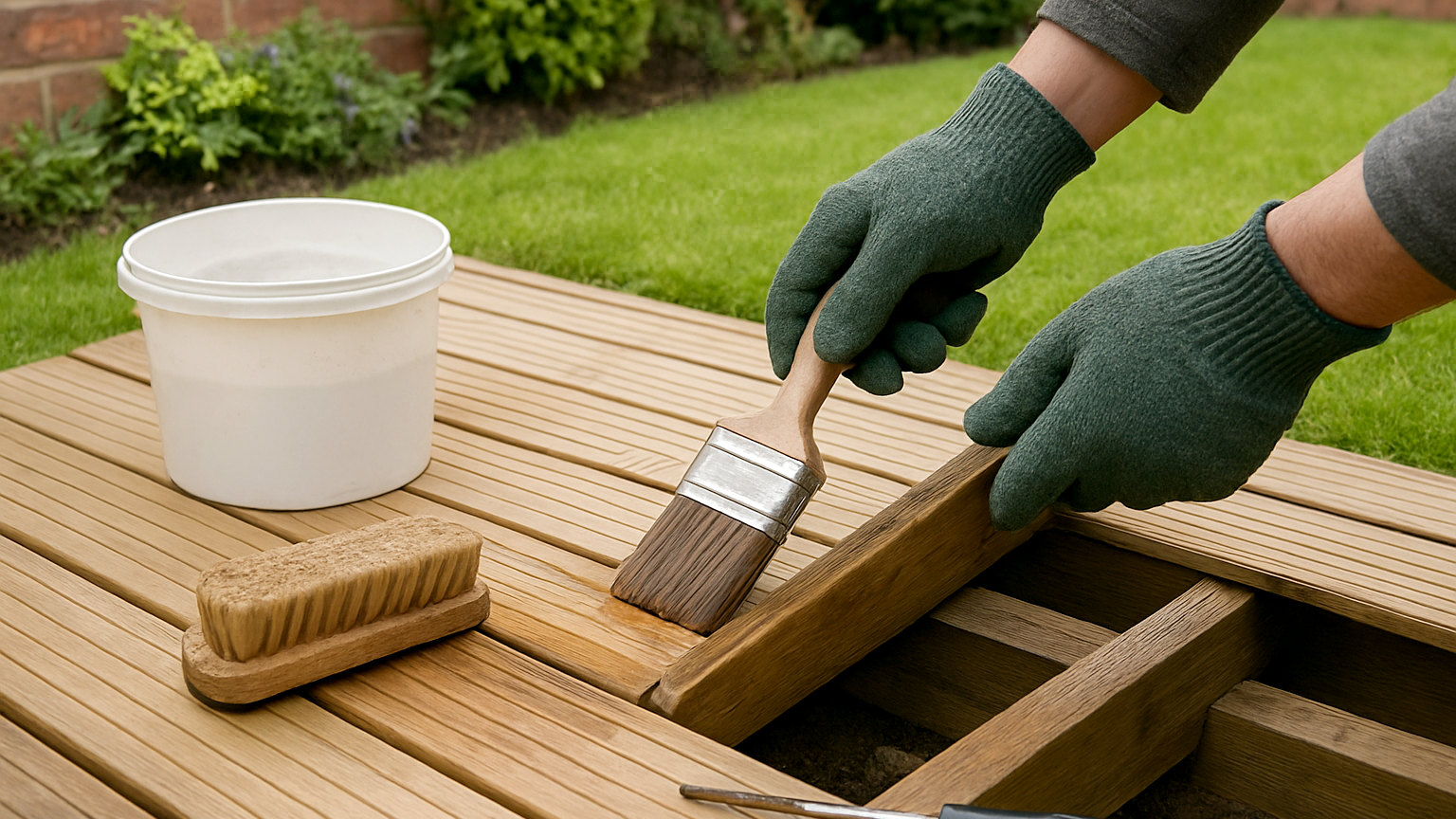
Timber decking is not a low-maintenance surface. Left alone it goes grey, grows algae, splinters and eventually rots. The routine is not onerous and it has to actually happen.
The annual clean
Do it in spring, or in autumn before the wet months, and ideally both.
Sweep thoroughly and clear the gaps between boards with a thin blade or a stiff brush, since trapped debris holds water against the timber.
Clear leaves and debris from beneath the deck, which is where the frame rots.
Wash with a deck cleaner or an algae remover, following the instructions and allowing the stated contact time.
Rinse thoroughly and let it dry completely before doing anything else.
Pressure washers
Useful and easily misused.
High pressure raises the grain of softwood, gouges the surface and drives water into the timber. The result is a deck that looks worse and splinters afterwards.
Use the lowest effective pressure with a fan nozzle rather than a pencil jet, keep it moving, hold it well back, and work along the grain.
Let the deck dry for several days afterwards before applying any treatment, since sealing in moisture causes exactly the problems the treatment is meant to prevent.
Oil, stain or paint
Decking oil penetrates the timber, feeds it, reduces water absorption and lets the grain show. It weathers away gradually rather than peeling, so recoating is straightforward. This is the usual choice.
Stain adds colour and some protection, and sits closer to the surface.
Paint and opaque coatings cover the timber entirely, look striking on the right deck, and peel and flake as they age, which means stripping before recoating. They are the highest-maintenance option.
Whatever you use, apply it to a clean dry deck in dry settled weather with no rain forecast, following the coverage rate rather than putting it on thickly.
How often
Oil every one to two years for a softwood deck, more often on a south-facing deck in full sun where ultraviolet degrades the finish faster.
Hardwood needs less, and many people let it weather to silver-grey deliberately, which is a legitimate choice rather than neglect.
Test whether a deck needs recoating by splashing water on it. Beading means the finish is still working; soaking in means it is time.
Checking the structure
The part that matters most and gets least attention.
Each spring, probe the frame with a screwdriver where posts meet the ground, where the frame meets the house, and anywhere water sits. Sound timber resists; rotten timber gives way.
Check fixings for corrosion and boards for splits, cupping and protruding screws.
Push the balustrade firmly. Any movement needs investigating at once.
Make sure air can still circulate beneath, and that the space has not filled with leaves or been enclosed by planting.
Replacing boards
Individual damaged boards can be lifted and replaced, which is one advantage of a screwed deck over hidden fixings.
A new board will not match a weathered one until it has aged, and treating the whole deck afterwards helps.
Treat the cut ends of any replacement with end-grain preservative.
Composite decking
Lower maintenance, not no maintenance.
Wash annually with soapy water or a proprietary composite cleaner to remove dirt and algae, which grows on the surface film rather than in the material.
Do not oil, stain or seal it.
Check the manufacturer's guidance before using a pressure washer, since many limit the pressure and some warranties are affected by using one.
Scratches and marks on composite cannot be sanded out, so avoid dragging furniture across it.
Clear the gaps and beneath the deck as with timber, since the frame is usually still timber and rots in the same way.
Winter
Clear leaves promptly, since wet leaves stain and make the surface dangerously slippery.
Do not use salt or de-icing products, which damage both timber and composite.
Move furniture and containers occasionally so the deck beneath dries out and does not stain differently from the rest.
The annual routine
Sweep and clear the gaps in autumn. Clean with a deck cleaner. Check the frame, fixings and balustrade in spring. Oil when the water stops beading.
That is a few hours a year, and it is the difference between a deck lasting twenty years and one needing replacing after eight.


