
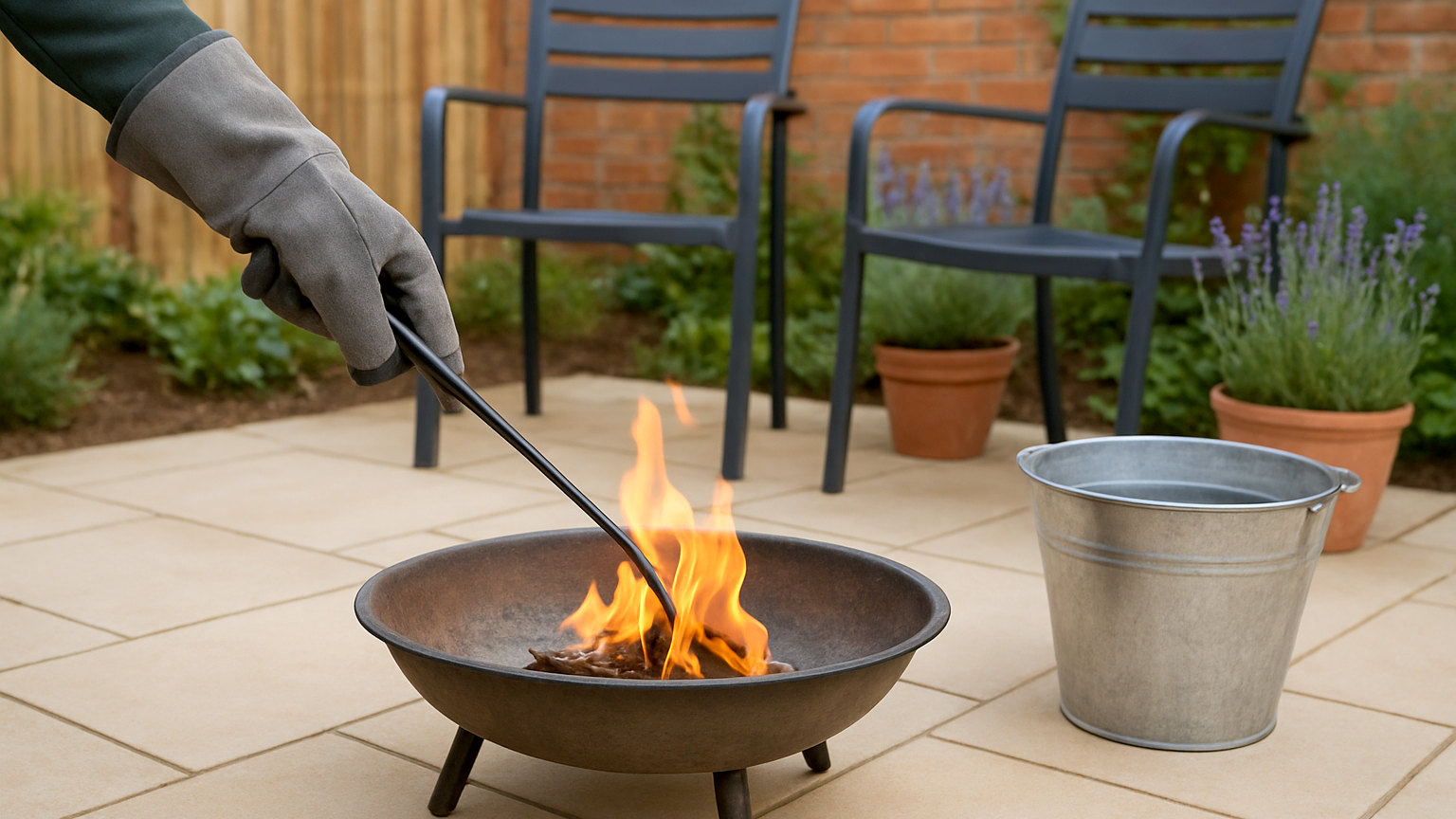
A fire pit or heater extends the use of a terrace by months. Both carry risks that are well documented and frequently underestimated, and one of them causes deaths every year.
Carbon monoxide
Never take a barbecue, fire pit or fuel-burning heater inside a tent, awning, shed, garage, conservatory or any enclosed space, including to keep warm and including after cooking has finished.
Smouldering charcoal continues producing carbon monoxide for hours after the flames have gone. The gas is colourless, odourless and tasteless, and people die in tents and garages every year, usually having brought a cooling barbecue in for warmth.
A partly open door or a vent is not adequate ventilation.
The same applies to gas heaters, which must only be used outdoors in genuinely open air.
Symptoms of carbon monoxide poisoning resemble flu: headache, dizziness, nausea and confusion. Anyone affected should get into fresh air immediately and seek medical help.
Siting
Well away from buildings, fences, hedges, sheds, overhanging branches and anything that could catch.
Allow generous clearance overhead as well as around, since heat and sparks rise.
Site it out of the prevailing wind and away from where smoke will blow into a neighbour's windows or your own.
Keep it off any route people walk, and away from where children play.
Surfaces
Never use a fire pit directly on decking, timber or artificial grass. Embers burn straight through, and composite and artificial turf melt.
Use a proper heatproof base, a substantial paving slab, or stand the pit on legs with a heat shield beneath.
Even on paving, intense heat can crack natural stone and concrete slabs, so a purpose-made base or a layer of sand within the pit protects the surface.
Never light a fire directly on a lawn, which sterilises and kills the grass beneath.
Using one safely
Keep a bucket of water, sand or a hose within reach whenever a fire is lit.
Never use petrol, paraffin or any accelerant. Use firelighters and dry seasoned wood.
Burn dry seasoned hardwood rather than green wood, treated timber, painted wood or rubbish. Treated and painted timber releases harmful substances.
Do not overfill, and never leave a fire unattended.
Supervise children and pets constantly, and keep them at a safe distance. A fire pit stays dangerously hot long after the flames have gone.
Let the ashes cool completely, over at least twenty-four hours, before disposing of them, and never put warm ashes in a plastic or wheeled bin.
Smoke and neighbours
Smoke is the commonest source of complaint about garden fires.
Burning dry seasoned wood produces far less smoke than damp or green material.
Consider the wind direction and your neighbours' washing and open windows.
Persistent smoke that affects a neighbour's enjoyment of their property can amount to a statutory nuisance, and local restrictions may apply in smoke control areas.
Types compared
Open fire pits give the most heat and the most atmosphere, and the most smoke and mess.
Chimineas direct smoke upwards, are more contained, and clay ones crack if overheated or exposed to rain and frost.
Log burners with a flue are the most controlled and the most expensive.
Gas fire pits and heaters produce no smoke or embers, light instantly and burn fossil fuel. Cylinders must be stored upright outdoors in a ventilated place and never in a cellar or under stairs.
Electric radiant heaters are the safest option, produce no fumes and need an outdoor-rated supply protected by a residual current device.
Insurance and permission
Check whether a permanent built-in fire feature affects your home insurance, and check local rules on bonfires and smoke before burning garden waste.
A checklist before lighting one
Outdoors and genuinely in the open air. Clear of buildings, fences and overhanging branches. On a heatproof base. Water to hand. Dry seasoned wood only. Children and pets supervised. Never left unattended. Ashes left to cool for a full day before disposal.
Smokeless alternatives
Where smoke is a problem, a gas fire pit or an electric radiant heater gives warmth without smoke, embers or the mess of ash.
Neither has the atmosphere of a wood fire, and both are considerably easier to live with in a small garden with close neighbours.


