
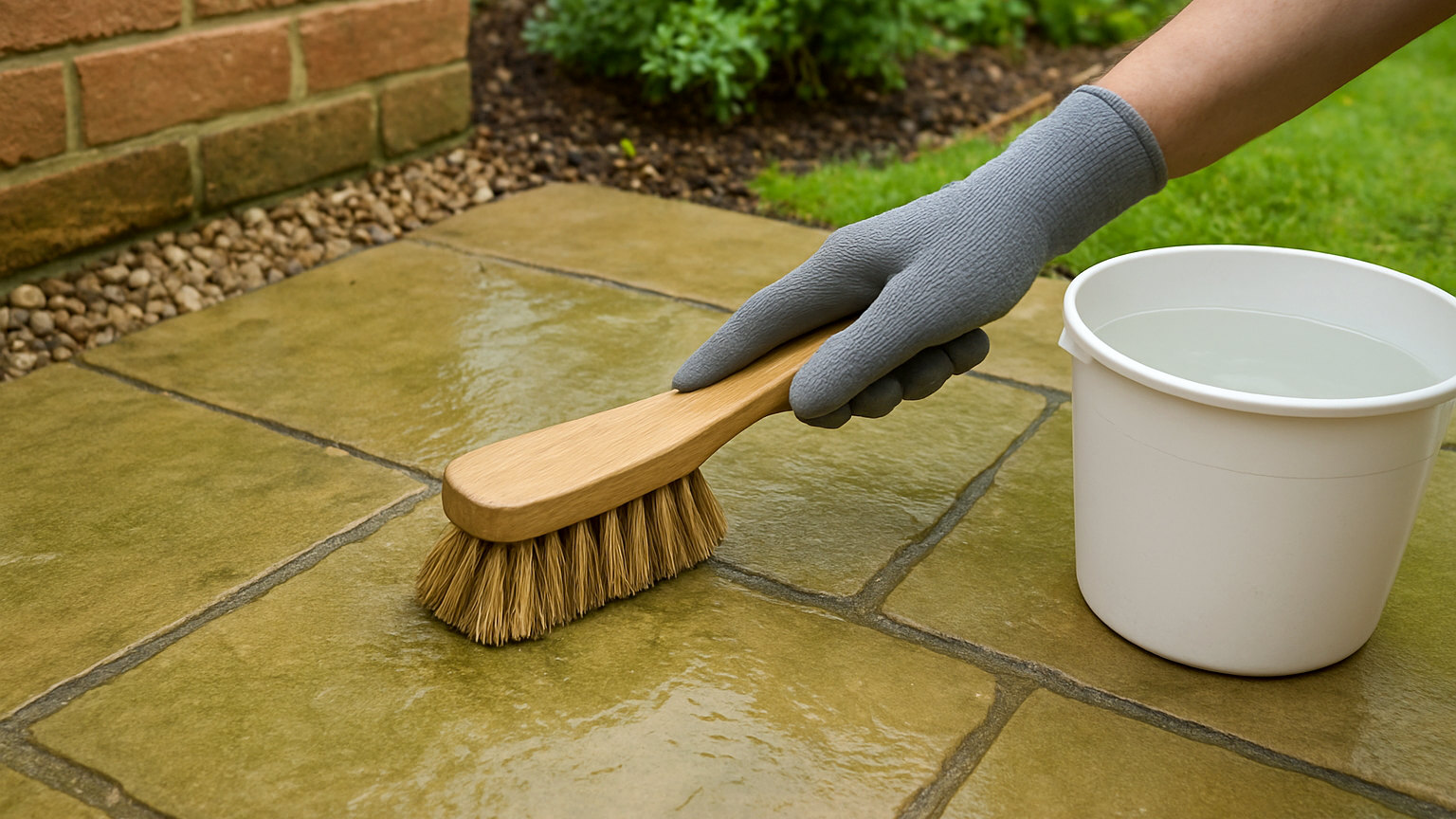
Most paving damage attributed to weather is actually caused by cleaning. Pressure washers used at full power do a great deal of harm, and the wrong chemical destroys some stone outright.
Routine that prevents most problems
Brush regularly. Most staining, algae and weed growth develop in the layer of debris that accumulates on the surface.
Clear leaves promptly in autumn, since a wet layer left through winter stains stone and feeds algae.
Keep gutters and downpipes clear, since overflowing water onto paving is a common cause of persistent green growth.
Improve airflow and light where you can by cutting back overhanging plants, since shaded damp paving is always the worst.
Pressure washers
Useful and frequently misused.
High pressure erodes the surface of soft stone, particularly sandstone, and blasts jointing material out. Once the joints are gone, the paving loosens and weeds establish.
On concrete slabs it can strip the surface layer, exposing the coarse aggregate beneath and leaving a permanently rough patchy appearance.
If you use one, use the lowest effective pressure and a fan nozzle rather than a pencil jet, keep the nozzle a sensible distance from the surface, and work evenly so the result is consistent.
Never use one on soft or crumbling pointing, on reclaimed brick, or on anything already deteriorating.
Expect to re-point after pressure washing older paving.
Chemical cleaners
Match the product to the material, since this is where irreversible damage happens.
Acidic cleaners must never be used on limestone, which is dissolved by acid. The same applies to any limestone-based product and to mortar joints.
Acid-based products, including some patio and cement-residue removers, can also etch sandstone and damage concrete.
Alkaline and neutral cleaners are safer for general use.
Sodium hypochlorite, meaning household bleach, kills algae effectively and can damage plants and lawn where it runs off, and it should not be allowed to enter drains or watercourses.
Proprietary algae and mould removers designed for paving are the usual choice.
Always test any product on an inconspicuous area first and follow the label, which is a legal document.
Algae and green growth
Almost universal on shaded damp paving in Britain, and mainly a slip hazard rather than damage.
Treat in autumn or spring with an appropriate cleaner, following the instructions and allowing the time it specifies to work.
Brushing alone removes a good deal.
The long-term answer is more light and better drainage rather than repeated treatment.
Common stains
Cement haze from careless pointing, which is difficult to remove and best prevented by wiping splashes immediately.
Rust from metal furniture or fixings, which needs a specific rust remover and may not come out entirely.
Oil, which needs a degreaser or a poultice, applied as soon as possible.
Barbecue and food stains, which respond to a degreaser if tackled promptly.
Leaf and tannin staining, which fades over time and can be improved with a general cleaner.
Blot rather than rub any spill, and treat it before it penetrates.
Sealing
Optional and not always beneficial.
Sealing porous natural stone reduces staining and makes cleaning easier, particularly around a dining area.
It changes the appearance, sometimes darkening the stone, and it needs redoing every few years.
It must be applied to clean, dry, fully cured paving. Sealing in dirt or moisture makes matters permanently worse.
Porcelain does not need sealing.
Annual check
Each spring, walk the paving and look for rocking slabs, failed pointing, weeds establishing, and any change in level.
Dealing with a single loose slab takes an hour. Leaving it lets water into the bed and spreads the problem to its neighbours.
Safety
Wet algae-covered paving is genuinely slippery, and steps and slopes are where falls happen.
Treat shaded routes before winter rather than after a fall, and keep the surface brushed through autumn.
Wear eye protection and gloves when using any cleaning chemical, keep children and pets off treated areas until dry, and never allow run-off to reach a pond or a watercourse.
What not to do
Do not use a wire brush on soft stone, which scratches it permanently.
Do not use salt or de-icing products on natural stone or concrete paving, which damages the surface over time.
Do not mix cleaning products, and do not use anything without checking it suits the material.


