
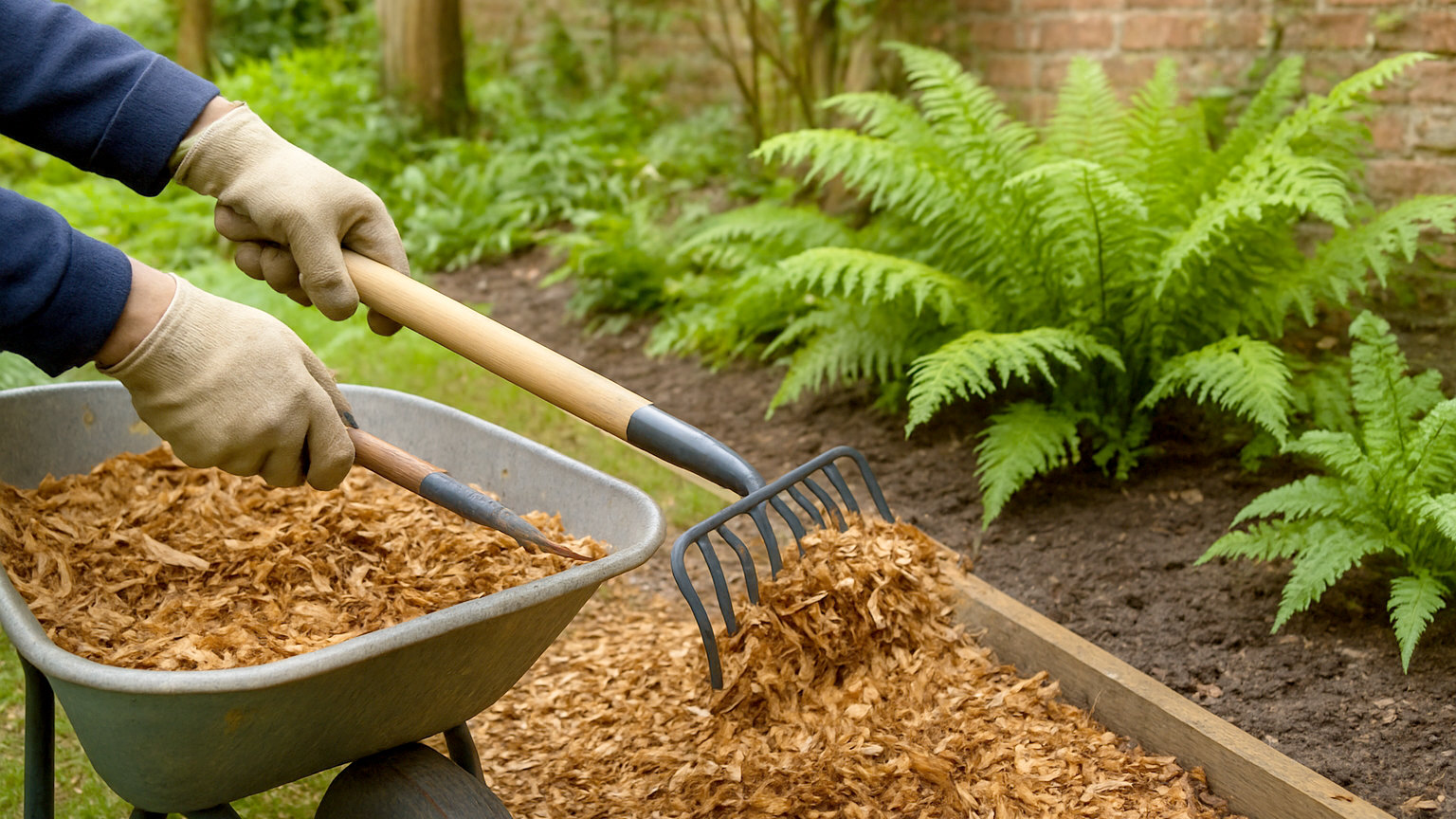
A bark or woodchip path costs a fraction of any hard surface, takes an afternoon to lay, is quiet and soft underfoot, and suits informal, woodland and productive parts of a garden. It also needs topping up.
Where it suits
Woodland and shaded areas, where it looks entirely appropriate and hard paving would not.
Kitchen gardens and allotments, between beds.
Informal routes through planting, and secondary paths.
Play areas, where the cushioning is an advantage.
It is less suited to main routes to a door, anywhere used in all weathers with a wheelbarrow, or anywhere requiring a firm level surface for accessibility.
Materials
Composted or graded bark is the most attractive and the most expensive, dark in colour with a fine even texture.
Woodchip is coarser and cheaper, and often available free or very cheaply from tree surgeons, who otherwise pay to dispose of it.
Fresh woodchip is pale and looks raw for a season before weathering down.
Play-grade bark is graded to remove sharp pieces and is what to use where children fall on it, at the depth specified for the equipment height.
Avoid anything containing treated timber or painted material, and avoid very fine material, which compacts and holds water.
Construction
Excavate to about a hundred to a hundred and fifty millimetres, removing turf and topsoil.
Level the base and firm it.
Lay a permeable geotextile membrane over the base. This is one of the few places where membrane genuinely belongs, since it separates the bark from the soil, stops the two mixing, and slows weeds coming up from below.
Install edging before filling, since without it the bark migrates into borders and lawn.
Fill with seventy-five to a hundred millimetres of bark, raked level. Play areas need considerably more.
Edging
Essential rather than optional, since loose material spreads without it.
Timber gravel boards or roll-top edging suit the informality of the surface.
Log roll works in a woodland setting.
Metal or plastic edging strip is less visible.
Fix edging properly with pegs, since bark pushes against it.
Drainage
Bark paths drain freely through the surface, so falls are less critical than with hard paving.
Avoid laying one in a hollow where water collects, since permanently wet bark rots quickly and becomes slippery.
On heavy clay, a shallow layer of coarse material beneath the membrane improves drainage.
Maintenance
Expect to top up every two to three years, since the material rots down and the depth reduces.
This is the honest cost of the surface, and it is still cheap compared with hard paving.
Rake it level occasionally, and rake back any that has spread.
Weeds that establish in the surface pull out very easily, which is one of the advantages.
Clear leaves in autumn, since a layer of rotting leaves on bark becomes slippery.
The rotting material
Bark and woodchip decompose, which is why they need topping up.
The rotted material at the bottom becomes good soil conditioner and can be raked off and used in borders when you re-lay.
Woodchip on the surface does not rob nitrogen from the soil in any meaningful way. That concern applies to material dug into soil, not to a surface layer.
Appearance
Bark darkens and settles within a season, and looks better after a year than when freshly laid.
It suits informal planting and looks out of place in a formal setting or against crisp modern materials.
Free woodchip
Tree surgeons will frequently deliver a load free or cheaply. Ask what species it contains, avoid anything from diseased trees, and let fresh chip weather for a few months before using it where appearance matters.
Do not accept material that includes treated or painted timber, or anything from a felled tree that was diseased.
Cost comparison
Bark is by some distance the cheapest path surface available, and even allowing for topping up every few years it remains far less expensive than paving.
The membrane and the edging account for a good part of the initial cost, and both are worth doing properly since redoing them means lifting everything.
What it will not do
It will not give a firm level surface for a wheelchair or a walking frame, it will not stay tidy under a wheelbarrow used all winter, and it will not suit a formal setting.


