
Most fences do not need planning permission. The limits are specific and the exceptions catch people out, particularly on front boundaries.
The rules below apply broadly to England. Scotland, Wales and Northern Ireland differ, and the local planning authority is the authority on your own case.
The general limits
A fence, wall or gate may generally be erected up to two metres in height without planning permission.
Where the boundary adjoins a highway used by vehicles, or a footpath alongside such a highway, the limit is one metre.
This second rule is the one most often missed. It covers most front garden boundaries, and a one metre eight hundred fence across the front of a house frequently needs permission.
Height is measured from the ground level on the higher side where levels differ.
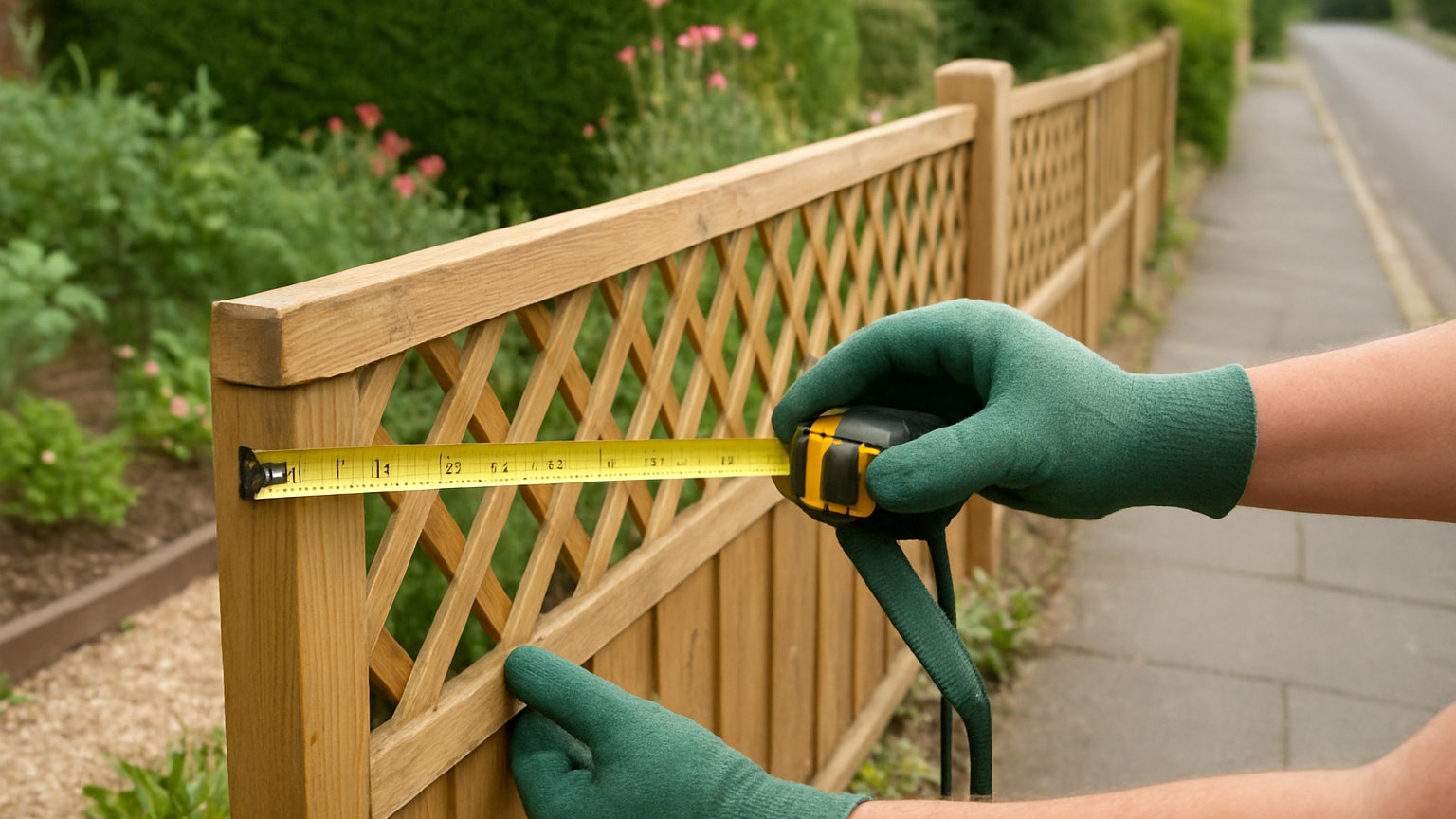
Trellis counts
Trellis, or anything else added on top, counts towards the total height.
A one metre eight hundred fence with three hundred millimetres of trellis is a two metre one hundred structure and exceeds the limit.
This is regularly claimed otherwise and it is not correct.
Where the usual rules do not apply
Listed buildings, where consent may be needed for almost any alteration within the curtilage.
Conservation areas, national parks and areas of outstanding natural beauty, where permitted development rights are frequently restricted.
New estates, where rights are sometimes removed by a condition on the original planning permission.
Flats and maisonettes, which do not have the same permitted development rights as houses.
Where the fence would obstruct visibility for road users at a junction or an access.
Restrictive covenants
A separate matter from planning and still binding.
Deeds frequently contain covenants restricting boundary treatments, particularly on newer estates and open-plan developments where front fences may be prohibited entirely.
A covenant binds you regardless of what the council permits, and it is enforceable by whoever has the benefit of it.
Check the deeds before erecting anything on a front boundary.
High hedges
Evergreen or semi-evergreen hedges over two metres can be the subject of a formal complaint under anti-social behaviour legislation, where they adversely affect a neighbour's reasonable enjoyment of their property.
The council can require the hedge to be reduced, and there are fees and penalties involved.
The legislation covers hedges of two or more evergreen or semi-evergreen trees or shrubs, not single trees and not deciduous hedges.
Complainants are expected to have tried to resolve matters informally first.
Maintenance and repair
Repairing or replacing an existing fence like for like at the same height does not usually require permission.
Increasing the height does.
Ownership and the neighbour
Establish who owns the boundary before altering anything. The deeds may show it, and the convention that posts and rails face the owner's side is a guide rather than a rule.
You may not attach anything to a fence you do not own, including trellis, plant supports or lights, without permission.
You may cut back growth overhanging your side of a boundary to the boundary line, and the cuttings remain the neighbour's property, so offer them back.
Talk to the neighbour before any work. Boundary disputes are expensive, unpleasant, and must be disclosed when selling a property.
Checking
Contact the local planning authority, who will confirm the position for your specific case.
Consider a lawful development certificate for anything borderline, which is formal confirmation that permission is not needed and useful evidence when selling.
It costs considerably less than being required to take a fence down.
Practical alternatives to height
Where a taller boundary would need permission, screening close to where you sit blocks a far wider angle of view than a taller fence at the boundary, and needs much less height.
A tree or a pleached hedge is not subject to the fence height rules and screens at first-floor level, which is where overlooking usually comes from.
Trellis within the garden rather than on the boundary is also unaffected by the boundary height limits.
If permission is needed
An application for a boundary fence is straightforward and inexpensive compared with most planning applications.
Neighbour objections about light and outlook are the usual reason for refusal, which is a further argument for discussing it with them first.


