
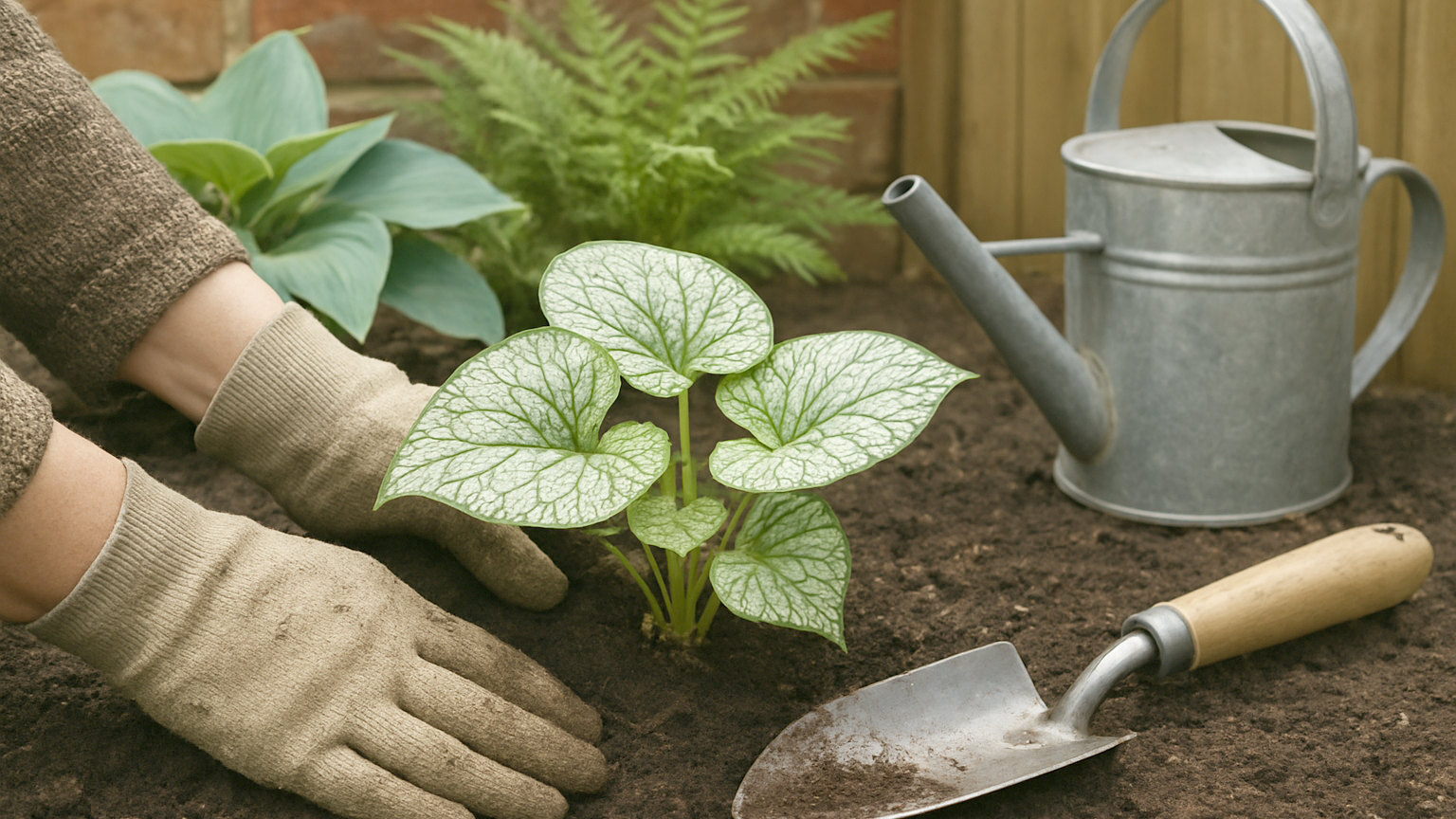
Shade is often treated as a problem and is better treated as a different set of opportunities. Some of the best planting in a garden happens in shade, and it depends on foliage rather than flowers.
Establish what kind of shade
Dappled or light shade under a high canopy or on the shaded side of a fence, with some direct sun during the day. The easiest, and a great deal will grow there.
Full but moist shade beside a north-facing wall, receiving no direct sun but plenty of light and rain. Suits a wide range of woodland plants.
Dry shade under mature trees or along the base of a wall, where roots take the moisture and the canopy or the eaves shed the rain. The genuinely difficult one.
Deep shade under dense evergreens or in a narrow passage. Very little will thrive; ferns, ivy and a mulched surface may be the honest answer.
The distinction that matters is dryness rather than darkness. Most shade failures are drought failures.
Foliage does the work
Flowers are scarcer in shade and leaves are not, so build the planting on leaf shape, texture and colour.
Contrast bold rounded leaves with fine ferny ones: hostas beside ferns, bergenia beside dryopteris, ligularia beside astilbe.
Use pale and variegated foliage to lift dark areas: brunnera Jack Frost, lamium, hakonechloa, variegated hostas, luzula.
Add texture with grasses and sedges suited to shade: hakonechloa, carex, luzula, deschampsia.
Pale colours read, dark ones vanish
White, cream, pale pink, pale blue and lime green all glow in low light.
Deep reds, purples and strong blues disappear into shade entirely and are wasted there.
White is particularly effective at dusk, when a shaded border is otherwise invisible.
Reliable plants for moist shade
Hostas, ferns, astilbe, brunnera, pulmonaria, hellebores, epimedium, tiarella, tellima, dicentra, aquilegia, hardy geranium phaeum and macrorrhizum, digitalis, aruncus, rodgersia, ligularia and hydrangeas.
Bulbs are outstanding here: snowdrops, aconites, cyclamen, wood anemone, erythronium, bluebells and daffodils all flower before the canopy closes.
Dry shade
The hardest condition and there is a reliable shortlist.
Epimedium, Euphorbia amygdaloides var. robbiae, bergenia, lamium, vinca, Geranium macrorrhizum, dryopteris ferns, iris foetidissima, symphytum, and cyclamen hederifolium, which is outstanding under beech and conifers where nothing else will grow.
Do not dig over the area under a mature tree, which damages the tree and is heavy work. Plant into pockets between roots, adding compost to each.
Mulch the whole area with leaf mould every autumn, which is what happens naturally and improves the ground steadily.
Water thoroughly through the first two seasons. A new plant competing with a mature tree will otherwise simply lose.
Seasonal strategy
Shade borders under deciduous trees have a light window from February to May before the canopy closes.
Use it. Bulbs, hellebores, pulmonaria and epimedium all flower in that period and then subside into foliage for the summer.
This means a shaded border can have a spectacular spring and a quiet green summer, which is a legitimate plan rather than a failure.
Improving the conditions
Where the shade is cast by a tree you own, raising the canopy by removing the lowest branches lets in considerably more light and rain.
Check for a Tree Preservation Order first, and use a qualified arborist for anything substantial.
Painting a fence or wall a light colour reflects noticeably more light into a border.
Cutting back overhanging shrubs achieves the same at no cost.
What not to attempt
Sun-loving plants will not perform in shade however well fed. Lavender, most roses, and Mediterranean planting all become drawn and leggy and rot in winter.
Planting them in shade and then feeding harder is a common and futile response.
Ground cover
Bare soil in shade grows weeds and moss. Dense ground cover is the answer and reduces maintenance to almost nothing.
Epimedium, Geranium macrorrhizum, lamium, vinca, tiarella and pachysandra all knit together into a continuous carpet within two or three years.
Mulching
Leaf mould is the ideal mulch for a shade border, since it mimics what happens naturally under trees and improves the soil steadily over the years.
Collect autumn leaves, stack them in a wire cage or bagged, and use the result after a year as a rough mulch or after two as a fine one.


