
The commonest complaint about a border is that it looks marvellous for six weeks and unremarkable for the other forty-six. Extending the season is mostly a matter of noticing when the gaps are.
Audit the year
Walk the border once a month for a year and note what is doing something.
The gaps are almost always the same: late winter, early spring before the main flush, and the period after the first big display finishes in July.
Fill those specifically rather than adding more of what already performs.
Late winter and early spring
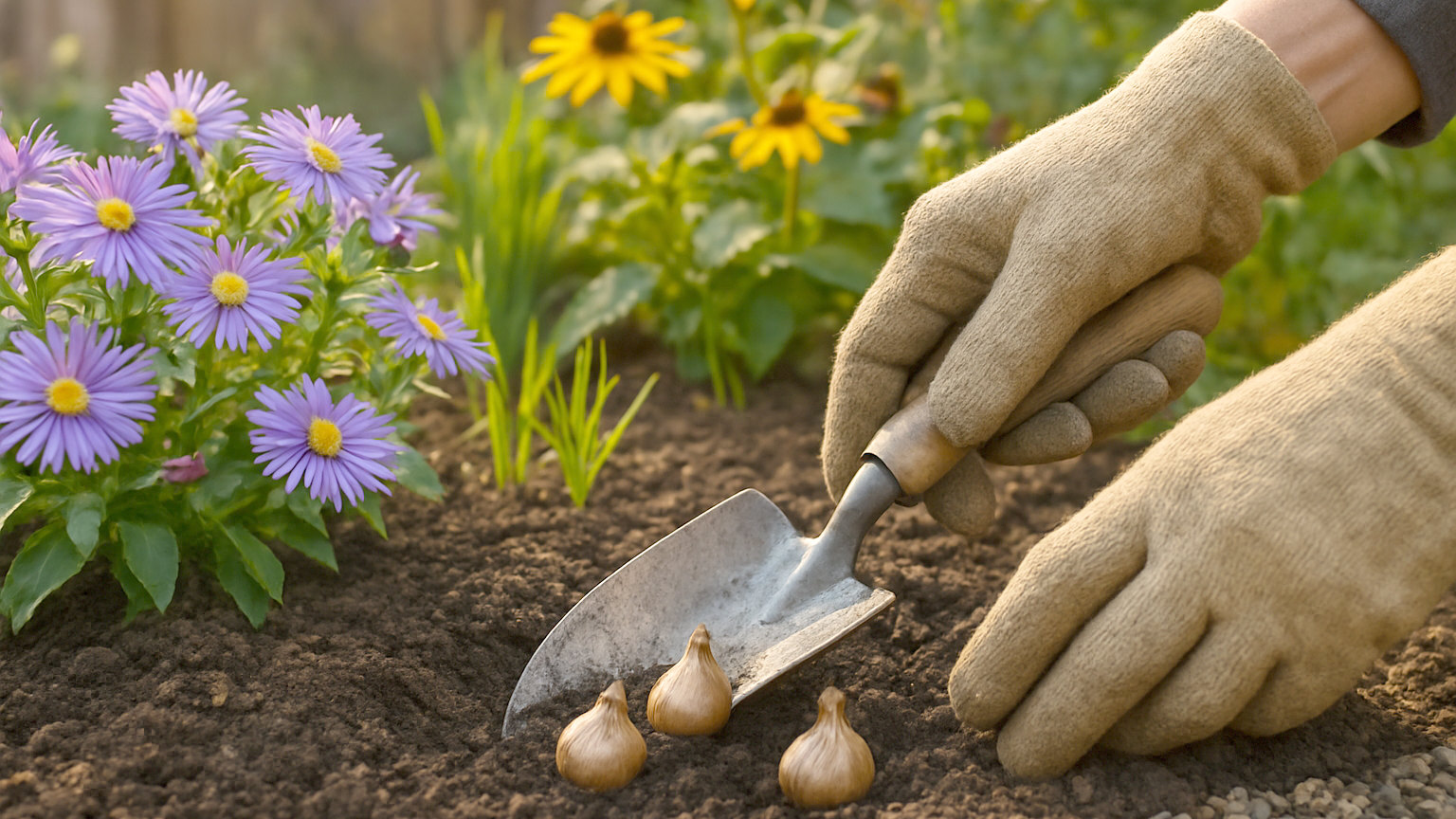
Bulbs are the answer and they occupy ground the summer planting will use later.
Snowdrops, winter aconites, crocus, iris reticulata, muscari, daffodils and then tulips carry a border from January to May.
Hellebores, pulmonaria, brunnera and epimedium all flower early and provide foliage afterwards.
Winter-flowering shrubs such as sarcococca, viburnum bodnantense, mahonia and witch hazel do the same job at a larger scale.
The early summer flush
This is the part most borders do well: alliums, geraniums, peonies, lupins, delphiniums, roses and early salvias.
The risk is putting everything here. Resist adding more June plants when the border is already full then.
The midsummer gap
Late July is where many borders fail, after the early flush and before the late one.
Cutting back is the technique that fills it. Hardy geraniums, nepeta, alchemilla and pulmonaria can be sheared to the ground after their first flush and produce fresh foliage within three weeks, often with a second flowering.
Deadheading rigorously keeps repeat-flowering plants going.
Annuals sown in gaps in spring flower from July onwards: cosmos, nigella, cornflower and calendula.
Later-flowering perennials such as phlox, agapanthus, crocosmia, echinacea and heleniums pick up the season.
Late summer and autumn
Frequently the best period in a well-planned border and the most often neglected.
Asters and symphyotrichum, hylotelephium, rudbeckia, helenium, japanese anemones, salvias, dahlias, verbena bonariensis and late grasses all flower from August into October.
Grasses come into their own at exactly this point, and a border with grasses is transformed in September.
Autumn bulbs such as colchicum, nerine and autumn crocus add a further layer.
Winter
Structure does the work: evergreen shrubs, clipped shapes, coloured stems and bark.
Leave seedheads standing rather than cutting back in autumn. Sedum, echinacea, eryngium, phlomis, teasel and grasses all hold form through winter, look superb under frost, feed birds and shelter insects.
Cut back in late February instead, which costs nothing and gives four months of interest.
Succession within a season
Layering plants that occupy the same ground at different times is the most efficient method.
Bulbs beneath perennials. Early perennials that die back replaced visually by later ones growing up around them. Annuals sown into gaps.
Oriental poppies, which leave a hole in July, are the classic case: plant something late beside them to grow through and cover the space.
Geraniums, asters and grasses all serve that purpose, and the same technique works for lupins, delphiniums and anything else that goes over early.
Foliage carries the gaps
A border built on foliage contrast looks good for six months regardless of what is flowering.
Where a border looks dull in a particular month, the answer is often more foliage variation rather than more flowers.
Practical steps
Buy plants in the month when your border is weakest, since garden centres stock what is performing then.
Visit other gardens in that month for ideas, since what is performing there is what your border is missing.
Add bulbs each autumn, which is the cheapest extension of the season available to any border.
Keep records, since nobody remembers in November what was missing in July.
A note on a phone each month, with a photograph taken from the same spot, is enough and takes seconds.
Do not chase every month equally
A border cannot peak all year, and trying to make it do so produces something that never does anything well.
Decide when this particular border matters most, and plan the peak for then. A border seen from a summer terrace and one seen from a kitchen window in winter should be planted quite differently.
What every border needs regardless is enough structure not to disappear entirely in February.


