
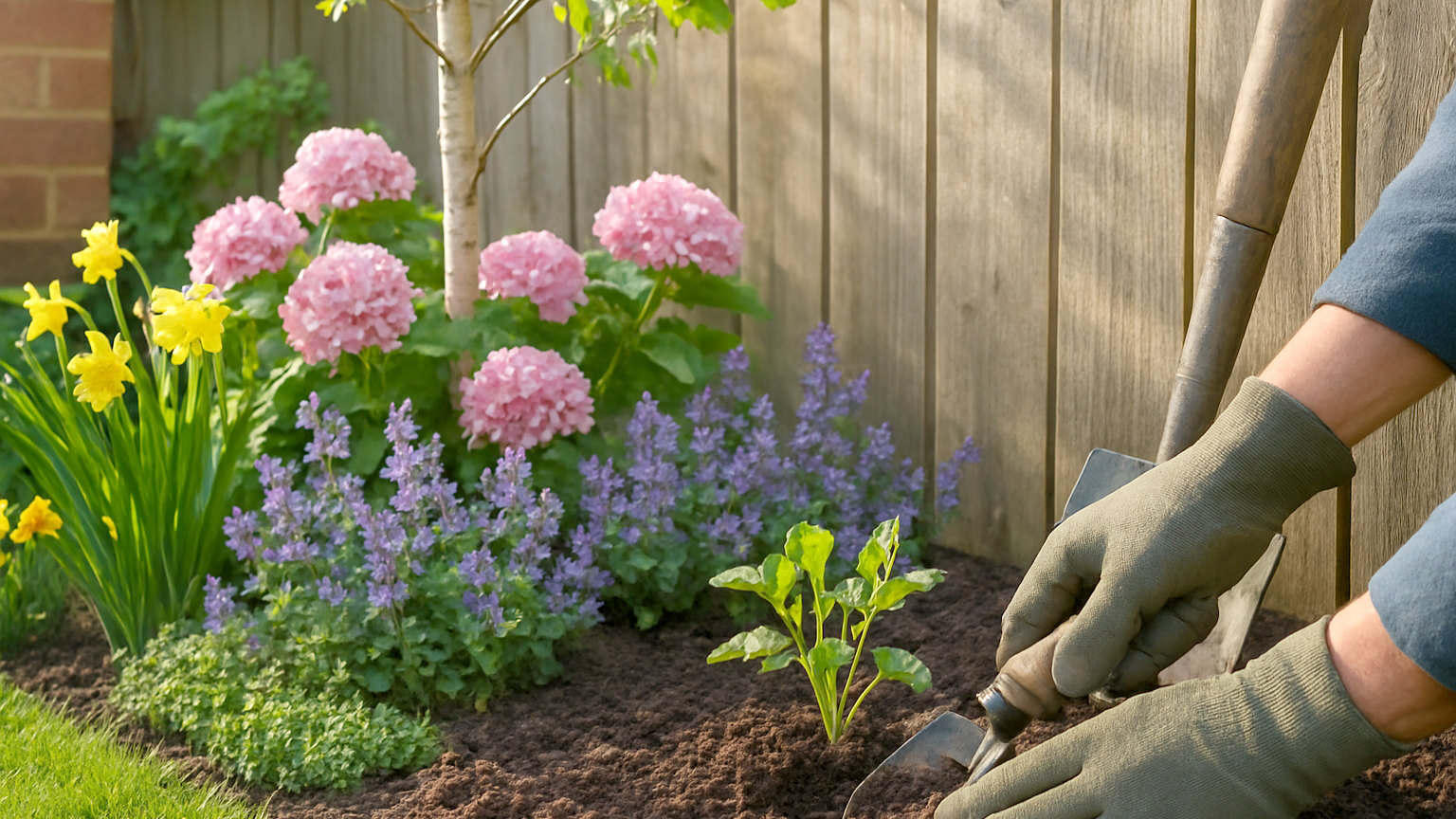
A border planted with one type of plant uses a fraction of the space available. Layering different kinds of planting through the same ground gives a longer season, denser cover and far more interest from the same area.
The layers
Canopy: a small tree or a large shrub giving height, shade and structure.
Shrub layer: medium shrubs providing the permanent framework and winter presence.
Herbaceous layer: perennials and grasses, which do most of the seasonal work.
Ground layer: low spreading plants covering the soil between the others.
Bulb layer: occupying the same ground as everything else but at a different time of year.
Most amateur borders have only the herbaceous layer, which is why they look empty in winter and need constant weeding.
Bulbs are the easiest layer to add
Bulbs occupy space that later plants will fill, flowering and dying back before the gap closes.
Snowdrops, aconites, crocus, daffodils, tulips and alliums all come up through and among perennials that are barely showing in early spring.
The dying bulb foliage, which is the main objection to bulbs in borders, is hidden by the perennial growth coming up around it.
This is free interest from ground already occupied, and it is the single most effective addition to an existing border.
Ground cover under shrubs
The bare soil under and between shrubs is wasted space and a weed nursery.
Epimedium, hardy geraniums, lamium, vinca, brunnera, pulmonaria, tiarella and ajuga all thrive there and knit together into a continuous cover.
Once established this eliminates most weeding and retains moisture.
Climbers through shrubs
A climber grown up through an established shrub uses no extra ground at all and extends the host's season by months.
A late-flowering clematis from group three through a spring shrub is the classic combination, since it is cut to the ground each February and never becomes a permanent tangle.
Annual climbers do the same job temporarily.
Getting the layers to coexist
The main risk is competition, particularly for water.
Keep vigorous ground cover a reasonable distance from the stems of shrubs and young trees, and clear a mulched circle around anything recently planted.
Improve the soil generously before layering, and mulch annually, since more plants in the same ground means more demand on it.
Choose ground cover appropriate to the conditions beneath the canopy, which is usually drier and shadier than the open border.
Timing so layers do not clash
The aim is for layers to take turns rather than compete for attention.
Bulbs in late winter and spring. Shrubs flowering in spring or early summer. Perennials from June to October. Seedheads and evergreen structure through winter.
Look at what the border does in each month and fill the gaps rather than adding more of what it already has.
Planting order
Plant the largest and longest-lived elements first: trees, then shrubs, then perennials, then ground cover, and bulbs last, working around what is already in.
Bulbs can be added to an established border in autumn by working carefully between existing plants with a trowel.
Spacing
Layering allows closer planting than a single-layer border, since the plants occupy different volumes and different seasons.
It is not licence to overcrowd. Shrubs and trees still need their mature spread, and only the herbaceous and ground layers can be tucked between them.
What it achieves
A longer season, denser cover, less weeding, better use of a small space, and considerably more habitat for wildlife, which uses gardens in layers exactly as this describes.
Layering in a small garden
This is where it matters most, since ground is limited and every square metre has to work several times over.
A single small tree, three or four shrubs beneath it, perennials between them, ground cover below and bulbs throughout turns a few square metres into something with interest in every month.
Starting from an existing border
Most established borders are missing the bulb layer and the ground layer, and both can be added without disturbing anything.
Plant bulbs in autumn between the existing plants, working carefully with a trowel, and slot ground cover into the bare soil beneath shrubs in spring.
Both are cheap, both are quick, and between them they extend the season and reduce the weeding considerably.


