
Grasses do things no other plants do. They move in the slightest breeze, they catch low light and glow, and they hold their form through winter when everything else has gone.
Two groups
The distinction matters for both placement and maintenance.
Cool-season grasses start growing early, look good from spring, and often flower by early summer. They may go dormant or look tired in hot weather. Stipa, festuca, deschampsia and helictotrichon belong here. Most are evergreen or semi-evergreen and are combed through rather than cut down.
Warm-season grasses start late, sometimes not showing until May, and peak from late summer into autumn. Miscanthus, panicum, pennisetum and molinia belong here. These are cut down in late winter.
A border using both has grass interest from spring to the following February.
Reliable choices
Stipa tenuissima: fine, blonde, constantly moving. Comb out dead material in spring rather than cutting. It self-seeds freely, which is welcome or not.
Stipa gigantea: tall oat-like flower heads on a modest evergreen base. Transparent, so it can go near the front.
Miscanthus: the workhorse, from a metre to over two, flowering from late summer and standing all winter.
Molinia: upright and airy, with excellent autumn colour, then collapsing cleanly in midwinter.
Panicum: a cloud of tiny flowers, superb backlit.
Calamagrostis Karl Foerster: strictly vertical, early and long lasting, useful as a repeated exclamation mark.
Hakonechloa: for shade, a low golden cascade.
Carex and luzula: sedges and woodrushes for damp and shaded ground.
Place them for backlighting
Grasses look best with the sun behind them. This is the single most useful placement rule.
Site them where low morning or evening sun will come through them, which usually means on the side of a border facing away from your main viewpoint.
A grass backlit by September sun is a different plant from the same grass lit from the front.
Transparency
Many grasses can be seen through, which means they need not go at the back.
Stipa gigantea, molinia and panicum placed at the front veil what is behind them and add depth, which is one of the most useful devices in modern planting.
Combining with perennials
Grasses suit plants with strong flower shapes that contrast with their fineness.
Flat plates: achillea, sedum, fennel.
Spires: veronicastrum, salvia, verbascum.
Daisies: echinacea, rudbeckia, helenium, asters.
Spheres: alliums, echinops.
This combination of grasses with strong-formed perennials is the basis of naturalistic and prairie planting.
When to cut back
Late February or early March, not autumn.
Grasses left standing hold their form all winter, catch frost, feed birds and shelter insects in the hollow stems.
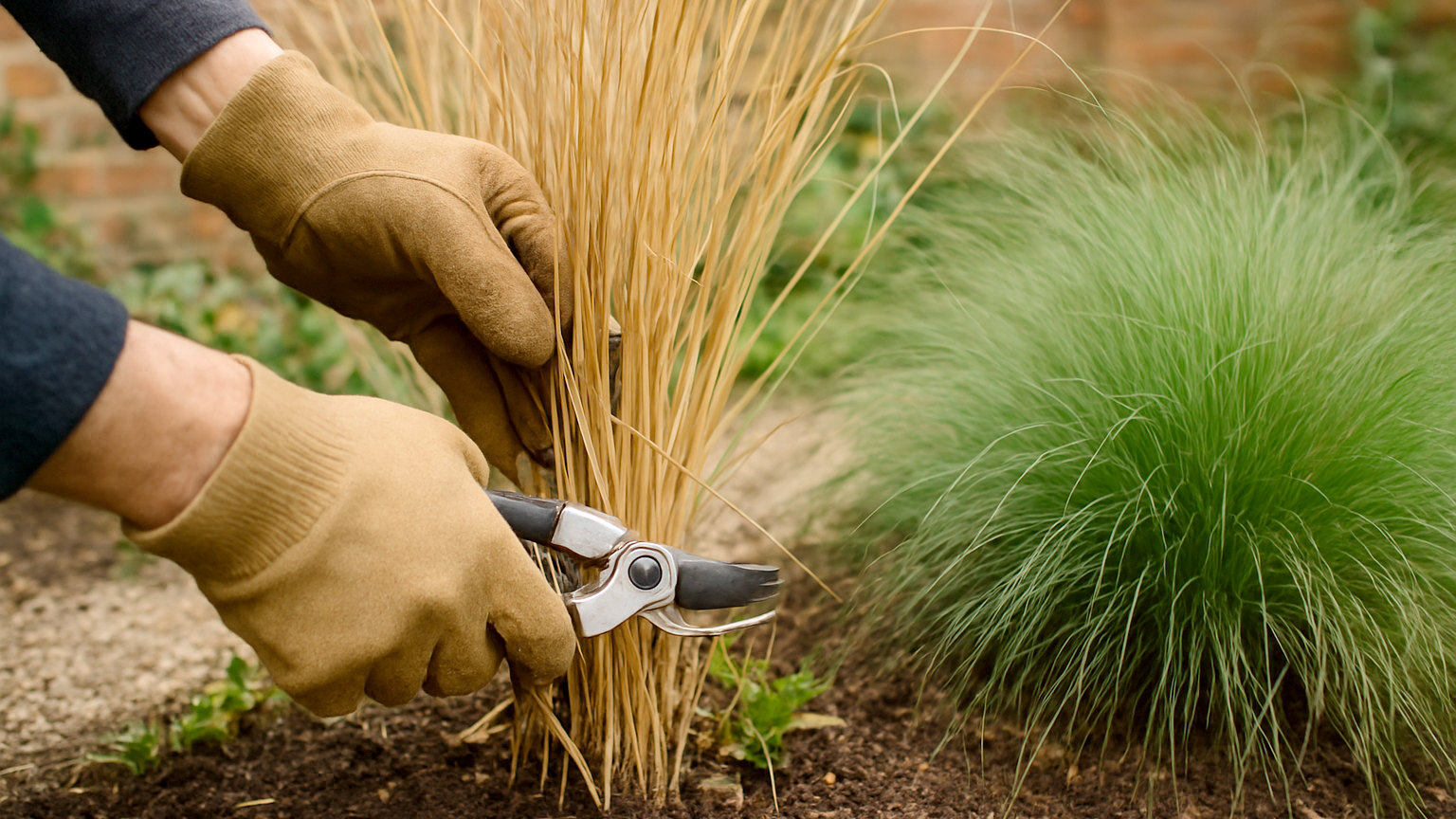
Cut deciduous grasses down to a few centimetres before new growth starts. Once the new shoots appear it becomes fiddly and you will damage them.
Evergreen and semi-evergreen grasses are not cut down. Comb through them with gloved hands or a spring rake to pull out dead material.
Getting this the wrong way round is the commonest grass mistake: cutting an evergreen stipa to the ground kills or disfigures it.
Conditions
Most want full sun and free-draining soil, and dislike winter wet more than cold.
Do not feed. Rich soil produces floppy growth that needs staking.
Divide congested clumps in spring rather than autumn, since grasses establish poorly going into winter and may rot.
Most need dividing every three or four years, when the centre of the clump dies out.
A caution
Some grasses seed themselves prolifically. Stipa tenuissima in particular can become a nuisance, and a few ornamental grasses are invasive in some settings, so check before planting anything vigorous.
Deadheading before the seed ripens controls it, and dispose of surplus responsibly rather than tipping it over a hedge.
What they need from you
Very little. No feeding, no staking if grown lean, no deadheading, and one cut a year for the deciduous ones.
That combination of a long season and low maintenance is why grasses have become so widely used in modern planting.
Where they do not suit
A small formal garden, where their looseness can look untidy against geometry, though a single specimen used as an accent works well.
Deep shade, where only the sedges and woodrushes will thrive, and even they will be thinner than in better light.


